



























































































How to Choose the Right Bag Sealer for Your Business
Why This Choice Matters
A reliable seal protects products from moisture, air, dust, and tampering. It improves shelf life, reduces returns, and makes your operation more efficient. The challenge is that “bag sealer” covers several technologies. Each type excels with certain materials, environments, and throughput requirements. This guide breaks down how sealers work, compares common models, and maps them to real business use cases so you can choose with confidence.
How Heat Sealing Works, in Plain Language
A good seal depends on three factors working together:
- Time: how long the material is heated.
- Temperature: how hot the sealing element gets.
- Pressure: how firmly the jaws press the materials while they fuse and cool.
Get those three right for your film type and thickness, and you get a strong, consistent seal.
The Major Bag Sealer Categories
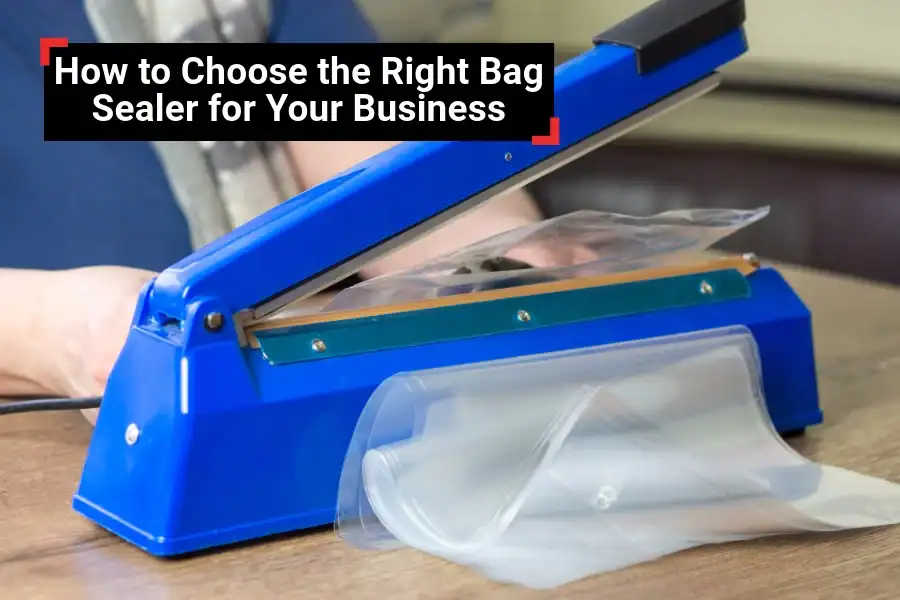
1) Impulse Heat Sealers
How they work: The element heats only when you press the arm, then cools immediately.
Best with: Polyethylene and polypropylene style bags and tubing.
Strengths: Energy efficient, fast to train, very versatile for general-purpose sealing.
Common formats: Handheld, tabletop, and foot-operated.
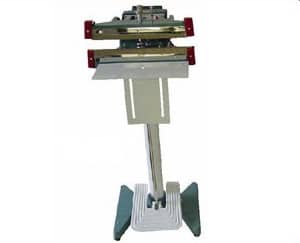
Where they shine:
- Retail bagging and light fulfillment
- Food packaging of dry goods or lined pouches
- Parts, hardware, samples, and small components
2) Constant Heat Sealers
How they work: The element stays at a steady temperature during operation.
Best with: Laminated films, foil pouches, and specialty structures that need continuous heat.
Strengths: Excellent for high integrity seals on multi-layer films, embossing, or date coding on some models.
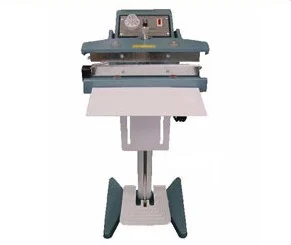
Where they shine:
- Coffee, tea, and premium food pouches
- Nutraceuticals, cosmetics, and chemical products
- Applications that need very strong, tidy seams on laminated films
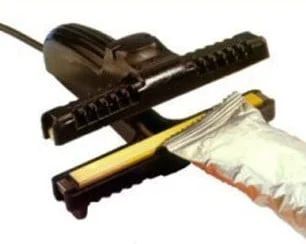
3) Handheld Heat Sealers
How they work: Portable impulse jaws or wands you bring to the bag.
Best with: Spot sealing, oversized items, on-the-go or irregular shapes.
Strengths: Flexibility, portability, minimal footprint.
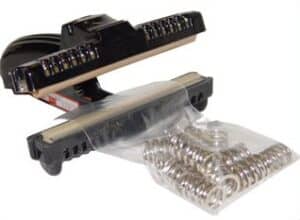
Where they shine:
- Field service or mobile fulfillment
- Sealing awkward or bulky items where a benchtop unit is impractical
- Low-volume, occasional sealing across departments
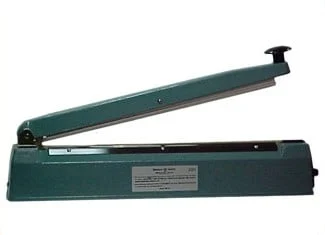
4) Tabletop Impulse Sealers
How they work: Bench units with a lever arm and adjustable timer.
Best with: Day-to-day sealing of standard poly bags and tubing.
Strengths: Simple setup, repeatable results, great for kitting and order packing.
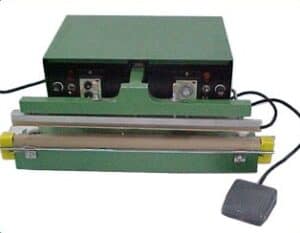
Where they shine:
- E-commerce pick-and-pack stations
- Pharmacies, clinics, and labs sealing inner liners
- Small parts, apparel, crafts, and general retail
5) Foot-Operated Impulse Sealers
How they work: Floor or bench units with a pedal that frees both hands.
Best with: Higher volumes, heavier bags, or tasks that benefit from two-hand loading.
Strengths: Throughput and ergonomics, consistent pressure.
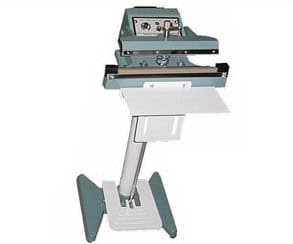
Where they shine:
- Production lines with steady order flow
- Heavier poly bags for hardware, auto parts, and industrial goods
- Food processors bagging bulk items or liners
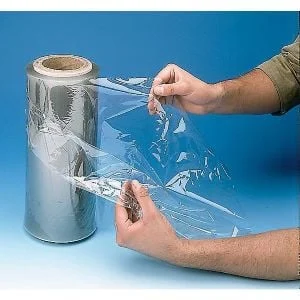
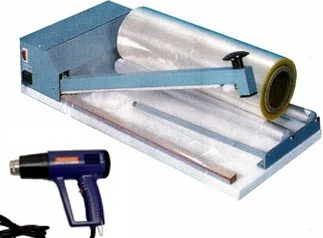
6) Shrink Film Systems
How they work: You create a loose seal around the product, then apply heat from a gun or tunnel so film contracts tightly.
Best with: Retail presentation, multipacks, and dust protection.
Strengths: Tight, professional appearance, tamper evidence, unitizing items.
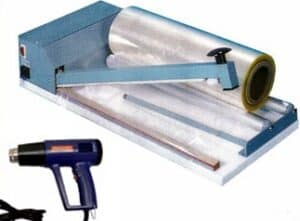
Where they shine:
- Retail gift sets, literature packs, and multipacks
- Printed cartons that benefit from scuff protection
- Electronics and cosmetics where visual presentation matters
Quick Comparison Guide
| Sealer Type | Ideal Materials | Throughput | Typical Advantages | Considerations |
|---|---|---|---|---|
| Impulse (Tabletop) | PE, PP bags and tubing | Low to medium | Versatile, energy efficient, easy to train | Bar length must fit your bag width |
| Impulse (Foot-Operated) | PE, PP, heavier bags | Medium to higher | Hands-free loading, consistent pressure | Larger footprint |
| Constant Heat | Laminates, foil, specialty films | Medium to higher | Strong seals, clean seams | Requires warmup, heat management |
| Handheld | Mixed, spot sealing | Low | Portable, works with irregular shapes | Operator consistency varies |
| Shrink System | Shrink films | Medium to higher | Retail look, multipacks | Requires heat source and venting |
Match the Sealer to Your Film
- Polyethylene and polypropylene: Most impulse sealers handle these well.
- Laminates and foil pouches: Constant heat performs best for strong, aesthetic seams.
- Shrink films: Pair sealers with a heat gun or tunnel.
- Coated or lined papers: Test small runs to verify seal response. Some require constant heat.

If you are unsure which material you use, check the bag spec sheet or ask your supplier for the resin type and structure.
Throughput, Size, and Workflow Questions to Answer First
- How wide is your typical seal: Choose a bar length that exceeds your bag width for easy sealing.
- How many seals per hour do you need: Tabletop impulse works for moderate volumes; foot-operated or constant heat suits higher volumes.
- How heavy or bulky are the items: Heavier bags benefit from foot-operated pressure and two-hand loading.
- Do you need code printing or embossing: Some constant heat and band sealers allow code printing.
- What does your space allow: Handheld tools fit anywhere; foot-operated and shrink tunnels need more space and power.
Industry-by-Industry Recommendations
- Food and beverage, dry goods, and bakery liners: Impulse tabletop or foot-operated sealers for poly liners and retail bags. Shrink systems for retail presentation or multipacks.
- Healthcare, labs, and pharmacies: Impulse tabletop for specimen bags or liners. Confirm any regulatory seal validation requirements.
- Nutraceuticals, cosmetics, and specialty retail: Constant heat for laminated or foil pouches requiring premium seams. Shrink systems for retail kits.
- Electronics, hardware, and industrial parts: Foot-operated impulse for heavy-duty poly bags; shrink systems for dust protection.
- Apparel and e-commerce: Tabletop impulse for quick packing; shrink systems for presentation and cleanliness in transit.
Seal Quality: How to Test It
- Visual check: Look for a uniform bead without gaps or burn-through.
- Peel test: Pull at the seam; the material should stretch or tear next to the seal, not along it.
- Leak test: Compress air-filled packages gently and check for escaping air.
- Periodic checks: Re-verify after any change in film lot, operator, or settings.

Tip: Document the time, temperature, and pressure settings that yield consistent results and post them near the workstation.
Maintenance That Pays for Itself
- Keep seal areas clean; debris causes weak spots.
- Replace heating elements and Teflon covers regularly.
- Verify timers and temperature controls periodically.
- Allow adequate cool-down time before removing sealed bags.
Safety and Compliance Reminders
- Use sealers only with compatible films and within specified temperature ranges.
- Provide heat-safe gloves where appropriate.
- Confirm packaging in contact with consumable products meets applicable safety standards; request documentation from suppliers.
- Maintain ventilation for shrink operations and keep heat sources away from flammables.
A Simple Decision Checklist
- What film type and width will you seal most often?
- What hourly volume must you support?
- Do you need hands-free loading or a small footprint?
- Do you require premium seams on laminated films, or general-purpose poly sealing?
- Will you add shrink for presentation or multipacks?
- What power and space do you have available?
Ready to Dial In the Right Sealer
Choosing sealing equipment is easier when you match film, throughput, and workflow. If you want help validating your material, bar length, or settings, the Action Packaging team can walk through options and recommend a setup that fits your environment.

Packaging Cost Management
Packaging costs are often treated as a fixed expense, but many businesses have opportunities to reduce costs through better purchasing strategies, supplier consolidation, product standardization, and inventory planning.
Many organizations focus on labor, freight, utilities, and raw materials when looking for savings opportunities, while packaging purchases remain largely unchanged year after year.
Over time, this can create unnecessary costs, duplicate products, fragmented purchasing practices, and operational inefficiencies. The good news is that packaging costs can often be reduced without disrupting your operation or lowering product quality.
The key is to look beyond the unit price and review how packaging is specified, purchased, stored, shipped, and used across your business.

1. Standardize Packaging Across Departments
One of the easiest ways packaging costs get out of control is through inconsistent ordering. Different departments, locations, or buyers may order similar packaging items from different vendors without realizing there is overlap.
Standardization helps reduce unnecessary variation. Instead of maintaining several similar bags, boxes, mailers, labels, or supplies, your business may be able to use fewer packaging items across more applications.
Fewer SKUs
Reduce the number of similar packaging items being managed, reordered, and stored.
Cleaner Inventory
Make it easier for purchasing, warehouse, and operations teams to know what to order.
Stronger Buying Power
Concentrate volume into fewer products to create better purchasing opportunities.
2. Consolidate Vendors Where It Makes Sense
Working with too many packaging vendors can create hidden costs. Every additional supplier may mean more purchase orders, more invoices, more communication, more freight coordination, and less visibility into total packaging spend.
Vendor consolidation can simplify purchasing and improve efficiency, especially when your business is buying similar products from several different sources.
Vendor consolidation should improve service, visibility, and efficiency. The goal is not simply to use fewer suppliers, but to work with better-aligned suppliers.

3. Review Packaging Specifications Regularly
Packaging specifications can become outdated. A product that made sense years ago may no longer be the best fit today, especially if product dimensions, order volume, shipping methods, storage requirements, or customer expectations have changed.
In some cases, businesses are using packaging that is heavier, larger, stronger, or more complex than the application requires. In other cases, they may be using packaging that creates damage, handling issues, or inefficiency.
- ✓ Bags that are heavier than necessary
- ✓ Boxes that are larger than the product requires
- ✓ Supplies that are being used for the wrong application
- ✓ Legacy items that have not been reviewed in years
- ✓ Multiple similar products that could be standardized
How Action Packaging Helps
A practical process for identifying savings opportunities.
1. Review Current Packaging
We look at the items your business is already purchasing and how those products are being used.
2. Analyze Product Usage
We review sizes, quantities, order patterns, applications, and possible overlap between items.
3. Identify Consolidation Opportunities
We help identify where similar products, vendors, or purchasing habits may be creating unnecessary complexity.
4. Recommend Practical Alternatives
We suggest options that are designed to reduce costs while protecting performance and operational needs.
4. Improve Inventory Planning
Poor packaging inventory planning can create avoidable costs. Running out of packaging may lead to rush orders, emergency freight, production delays, or last-minute substitutions. Overstocking can create storage issues and tie up cash in packaging that may not be used quickly.
Better planning helps balance availability with efficiency. This is especially important for businesses with seasonal demand, multiple facilities, large-volume usage, or products that require consistent packaging.
5. Take Advantage of Volume Opportunities
Packaging pricing is often influenced by order quantities, production runs, freight efficiency, and supplier planning. When your business has predictable usage, there may be opportunities to improve pricing through better forecasting.
This does not always mean taking on more inventory at once. In some cases, annual usage planning, blanket orders, scheduled releases, or coordinated purchasing can help create better outcomes.
6. Evaluate Distribution and Freight Strategies
Freight can significantly affect the true cost of packaging. A lower unit price does not always create savings if the shipping costs, lead times, minimum orders, or receiving requirements create problems elsewhere.
Reviewing how packaging moves through your supply chain can uncover opportunities for consolidated shipments, improved planning, better delivery timing, or more efficient sourcing.
7. Partner With a Supplier That Understands Your Business
The lowest unit price is not always the lowest total cost. Packaging impacts purchasing, warehousing, production, shipping, customer experience, and product protection. A good packaging partner should help you think through the full picture.
Action Packaging works with businesses to review current packaging programs, identify practical savings opportunities, and support long-term purchasing efficiency.
- ✓Vendor standardization
- ✓Packaging product reviews
- ✓Product matching
- ✓Volume opportunities
- ✓Inventory planning
- ✓Distribution support
- ✓Practical product alternatives
- ✓Long-term purchasing support
Ready to Identify Packaging Cost Savings?
Whether you are managing packaging for a manufacturing facility, distribution operation, food processor, retailer, or agricultural business, our team can help evaluate your current packaging program and identify opportunities to reduce costs.
Packaging Cost Savings
Packaging costs can grow quietly over time. A cross reference analysis helps your business review what you are buying, identify comparable packaging options, simplify purchasing, and uncover potential savings without lowering quality.
Many companies purchase packaging from multiple vendors, departments, and locations. Over time, that can lead to duplicate items, inconsistent pricing, unnecessary SKUs, and missed opportunities to buy smarter.
A packaging cross reference analysis helps clean that up. Action Packaging reviews the packaging items your business already uses and compares them against our product line, sourcing capabilities, and supplier network.
The goal is simple: help your organization reduce packaging costs, simplify purchasing, and maintain the quality your operation depends on.

What Is a Packaging Cross Reference Analysis?
A cross reference analysis is a detailed review of your current packaging items. You send us your item numbers, product descriptions, sizes, quantities, specifications, and purchasing details. From there, our team identifies matching or comparable packaging options.
This may include exact product matches, equivalent alternatives, better-value substitutions, or opportunities to standardize similar items across your business.
Review current packaging products against available alternatives.
Reduce duplicate SKUs and streamline vendor purchasing.
Find better value without moving into poor-fit packaging.
Why Businesses Use Cross Reference Analysis
Packaging needs can grow quickly. A business may start with a few standard bags, boxes, or supplies, then gradually add more items as new products, customers, locations, or departments are introduced.
- ✓Identify comparable packaging products that may offer better value
- ✓Reduce duplicate or unnecessary packaging SKUs
- ✓Standardize packaging across departments, locations, or product lines
- ✓Improve purchasing efficiency through vendor consolidation
- ✓Find opportunities for better pricing based on volume or product availability

How It Works
A clearer way to review packaging spend.
1. You Share Your Current Packaging Information
Send your item numbers, product descriptions, sizes, quantities, and specifications.
2. We Review Your Current Items
Our team reviews what you are currently purchasing and identifies possible matches or alternatives.
3. We Cross Reference Our Product Line
We compare your list against Action Packaging’s product line, supplier relationships, and sourcing capabilities.
4. You Receive Clear Recommendations
You get a better view of where savings, standardization, or vendor consolidation may be possible.
Where the Biggest Packaging Savings Often Come From
Vendor Consolidation
Working with too many vendors can create inconsistent pricing and extra administrative work. Consolidating more packaging purchases with one reliable supplier can make ordering easier.
Product Standardization
Many companies use several similar packaging items when one or two standardized options could work across more applications.
Better Product Matching
Sometimes businesses are using packaging that is overbuilt, undersized, oversized, or not ideal for the application.
What to Send Us
You do not need a perfect spreadsheet to get started. A current item list, invoice, purchasing report, or product list can be enough for our team to begin reviewing your packaging.
- ✓Current item numbers or SKUs
- ✓Product descriptions
- ✓Sizes and dimensions
- ✓Material type or specifications
- ✓Current quantities ordered
- ✓Order frequency
- ✓Current pricing, if available
- ✓Performance requirements
Ready to Review Your Packaging Spend?
Send us your current packaging item list, product descriptions, and quantities. Our team will review your items and help identify where Action Packaging may be able to provide better options.