Bag Sealer Buyer’s Guide
Why This Choice Matters
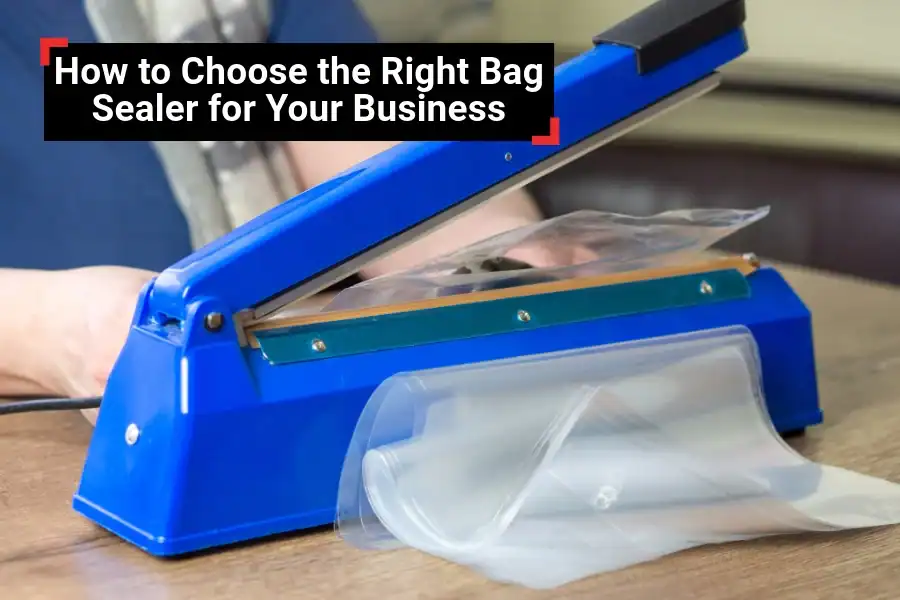
A reliable seal protects products from moisture, air, dust, and tampering. It improves shelf life, reduces returns, and makes your operation more efficient. The challenge is that “bag sealer” covers several technologies. Each type excels with certain materials, environments, and throughput requirements. This guide breaks down how sealers work, compares common models, and maps them to real business use cases so you can choose with confidence.
- •Match the sealer to your film
- •Plan for your required throughput
- •Choose equipment that fits your workflow
The Fundamentals
How Heat Sealing Works, in Plain Language
A good seal depends on three factors working together:
Get those three right for your film type and thickness, and you get a strong, consistent seal.
Equipment Overview
The Major Bag Sealer Categories
Compare how each sealer operates, the materials it handles best, and the applications where it performs well.
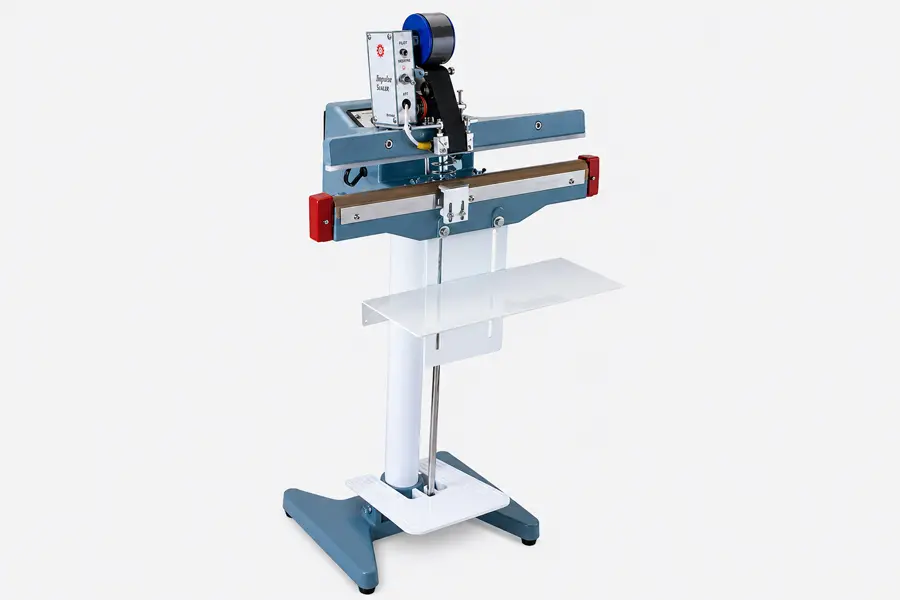
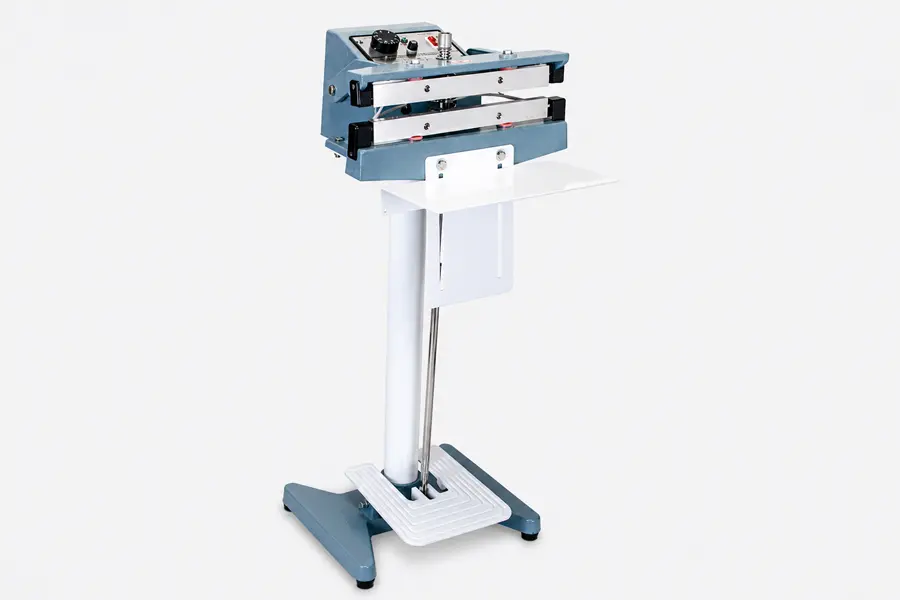
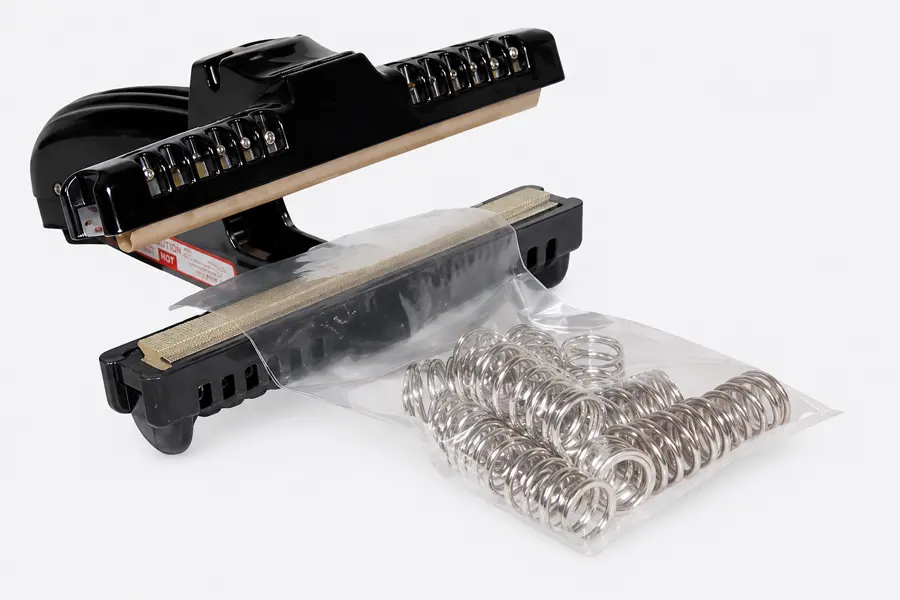
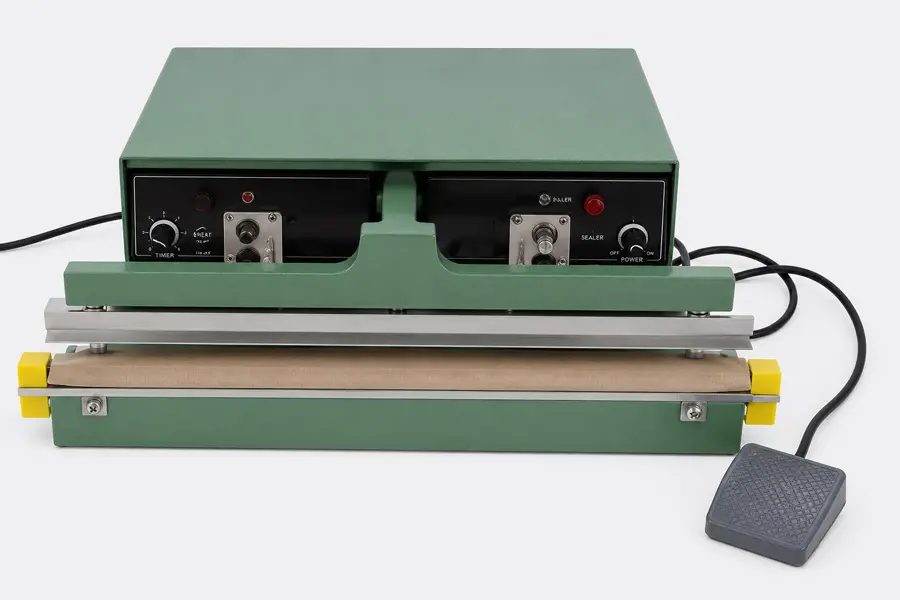
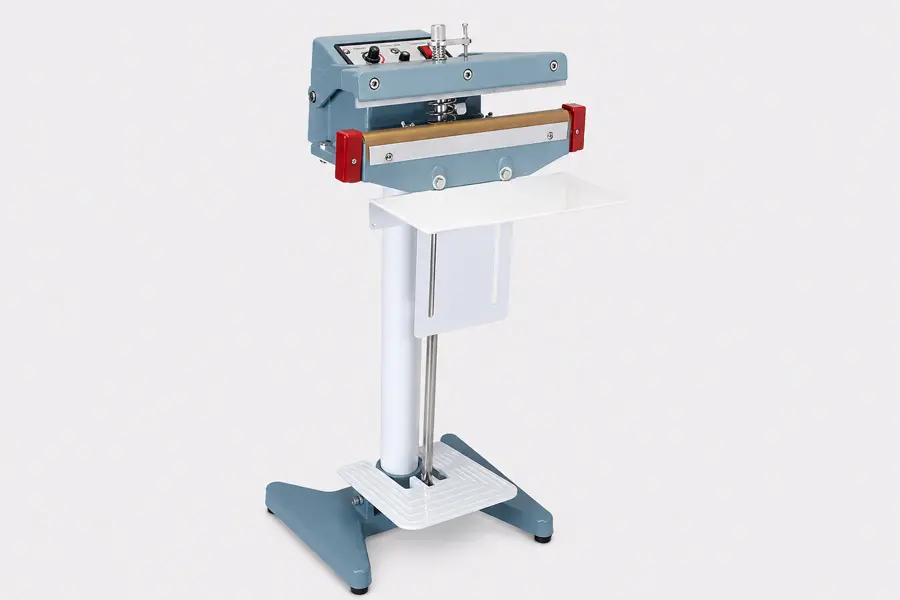
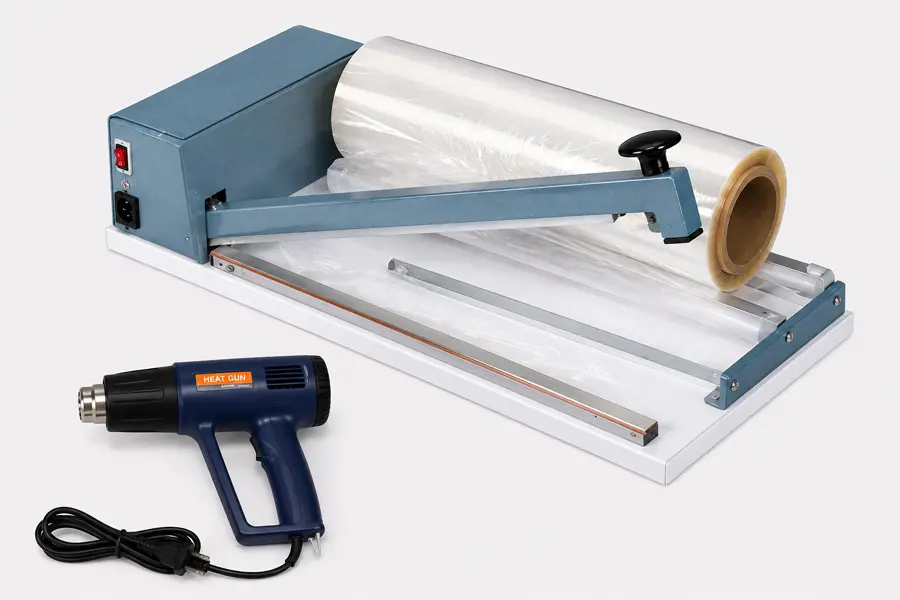
At-a-Glance Comparison
Quick Comparison Guide
Use this compact guide to narrow the options based on material, expected volume, and operating requirements.
Material Compatibility
Match the Sealer to Your Film
- Polyethylene and polypropylene: Most impulse sealers handle these well.
- Laminates and foil pouches: Constant heat performs best for strong, attractive seams.
- Shrink films: Pair sealers with a heat gun or tunnel.
- Coated or lined papers: Test small runs to verify seal response. Some require constant heat.
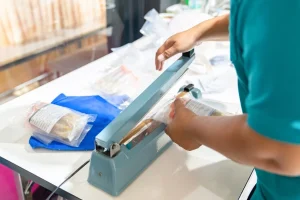
Tip: If you are unsure which material you use, check the bag specification sheet or ask your supplier for the resin type and structure.
Before You Purchase
Throughput, Size, and Workflow Questions to Answer First
- How wide is your typical seal?
Choose a bar length that exceeds your bag width for easy sealing. - How many seals per hour do you need?
Tabletop impulse works for moderate volumes; foot-operated or constant heat suits higher volumes. - How heavy or bulky are the items?
Heavier bags benefit from foot-operated pressure and two-hand loading. - Do you need code printing or embossing?
Some constant heat and band sealers allow code printing. - What does your space allow?
Handheld tools fit almost anywhere; foot-operated equipment and shrink tunnels need more space and power.
Common Applications
Industry-by-Industry Recommendations
Use impulse tabletop or foot-operated sealers for poly liners and retail bags. Consider shrink systems for retail presentation or multipacks.
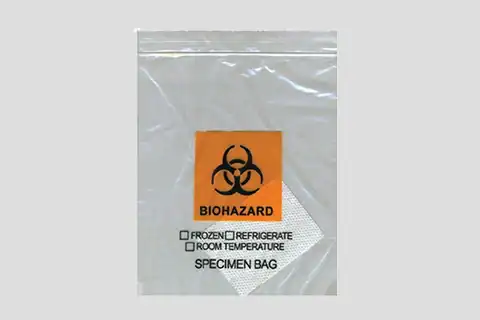
Use tabletop impulse sealers for specimen bags or liners. Confirm any applicable regulatory seal-validation requirements.
Use constant heat for laminated or foil pouches requiring premium seams, and shrink systems for retail kits.
Use foot-operated impulse sealers for heavy-duty poly bags and shrink systems for dust protection.
Use tabletop impulse sealers for fast packing and shrink systems for presentation and cleanliness in transit.
Quality Control
Seal Quality: How to Test It
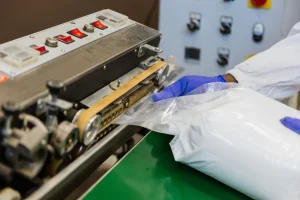
- Visual check: Look for a uniform bead without gaps or burn-through.
- Peel test: Pull at the seam. The material should stretch or tear next to the seal, not along it.
- Leak test: Compress air-filled packages gently and check for escaping air.
- Periodic checks: Re-verify after any change in film lot, operator, or settings.
Tip: Document the time, temperature, and pressure settings that produce consistent results, then post them near the workstation.
Upkeep
Maintenance That Pays for Itself
- Keep seal areas clean; debris causes weak spots.
- Replace heating elements and Teflon covers regularly.
- Verify timers and temperature controls periodically.
- Allow adequate cool-down time before removing sealed bags.
Safe Operation
Safety and Compliance Reminders
- Use sealers only with compatible films and within specified temperature ranges.
- Provide heat-safe gloves where appropriate.
- Confirm packaging used with consumable products meets applicable safety standards.
- Maintain ventilation for shrink operations and keep heat sources away from flammables.
Final Review
A Simple Decision Checklist
Answer these questions before choosing a machine or requesting a recommendation.
✓What film type and width will you seal most often?
✓What hourly volume must you support?
✓Do you need hands-free loading or a small footprint?
✓Do you need premium seams or general-purpose poly sealing?
✓Will you add shrink film for presentation or multipacks?
✓What power and workspace do you have available?
Need Help Choosing?
Ready to Dial In the Right Sealer?
Choosing sealing equipment is easier when you match the film, throughput, and workflow. The Action Packaging team can help validate your material, bar length, and settings, then recommend a setup that fits your operation.