Handheld Heat Sealers
Filters
Filter

| Qty | Price |
|---|---|
| 1 | $111.31 |
| Qty | Price |
|---|---|
| 1 | $96.26 |

| Qty | Price |
|---|---|
| 1 | $93.06 |

| Qty | Price |
|---|---|
| 1 | $16.65 |

| Qty | Price |
|---|---|
| 1 | $91.02 |
Handheld Heat Sealer Buying Guide
Handheld heat sealers give businesses a portable way to close compatible poly bags, cellophane packaging, clamshells, and other flexible packaging materials. Use this guide to compare material compatibility, temperature control, sealing applications, and operating considerations before choosing a portable bag sealer.
What is a handheld heat sealer?
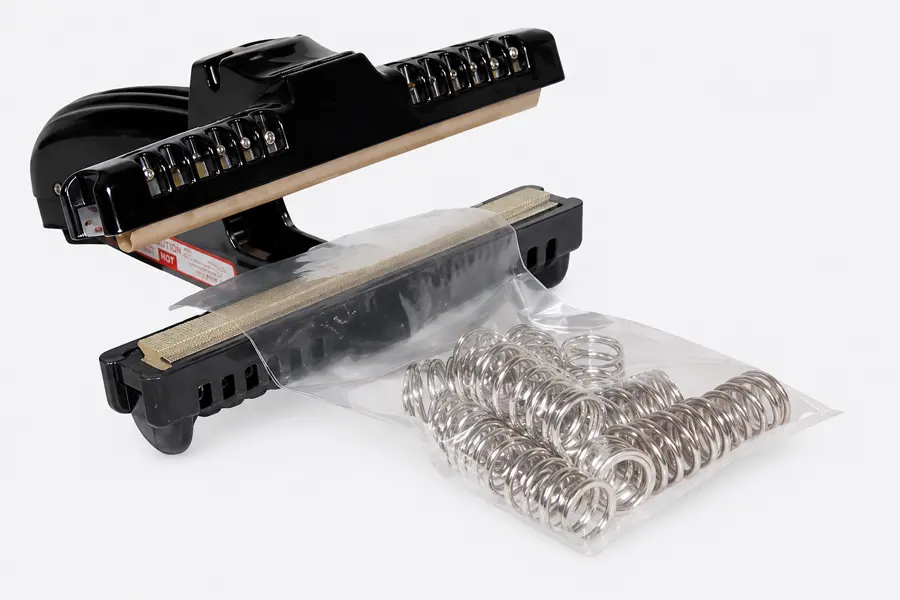
A handheld heat sealer is a portable device that applies heat and pressure to compatible packaging material to create a closed seam. Unlike a fixed tabletop machine, a handheld unit can be brought directly to the package or used in different areas of a packaging operation.
This flexibility can be useful for oversized packages, products that are difficult to move, mobile packing stations, low-volume sealing, and applications where a permanently mounted machine is not practical.
What materials can handheld heat sealers seal?
Material compatibility depends on the individual sealer. The products available on this page include models intended for compatible poly bags, cellophane packaging, and clamshell applications.
Do not assume that one machine will seal every packaging material. Confirm the material type, thickness, and construction of your packaging, then compare those details with the sealer's specifications before ordering.
How do I choose between a poly bag sealer and a cellophane bag sealer?
Begin by identifying the exact material you need to seal. Poly bags and cellophane packaging can require different equipment or operating conditions. Choose a model specifically identified for your packaging material instead of relying only on the bag's appearance.
If you are uncertain about the material, check the bag's product specifications or contact our team with the product number, material type, thickness, and intended application.
When should I choose a thermostat-controlled handheld sealer?
A thermostat-controlled model allows the operator to adjust and maintain the sealing temperature. This can be helpful when the packaging material requires more precise heat control or when an operation works with multiple compatible materials.
Always begin with the equipment manufacturer's recommended settings. Test the seal on a sample package before beginning a full production run.
What should I consider before ordering a portable bag sealer?
Evaluate the following factors before selecting a model:
- The material being sealed
- The material thickness and number of layers
- The required seal length and width
- The size and shape of the finished package
- How frequently the sealer will be used
- Whether adjustable temperature control is needed
- The available electrical supply at the work area
- Whether compatible accessories are required
How can I create a more consistent heat seal?
- Confirm that the bag material is compatible with the sealer.
- Keep the sealing area clean, dry, flat, and free from product residue.
- Remove wrinkles from the bag opening before applying the seal.
- Use the recommended temperature and sealing time for the material.
- Apply even pressure across the entire sealing area.
- Allow the seal to cool as directed before handling or testing it.
- Inspect the finished seam for gaps, wrinkles, scorching, or incomplete bonding.
How should I test a handheld heat sealer before production?
Test the equipment on the actual packaging material before sealing finished products. Begin with the manufacturer's recommended settings and make small adjustments only when needed.
A successful test seal should appear continuous and secure without burning, excessive distortion, weak areas, or unsealed sections. Repeat the test whenever the packaging material, thickness, equipment setting, or operating conditions change.
Are accessories compatible with every handheld sealer?
No. Accessories such as foot pedal attachments may be designed for specific machines or equipment configurations. Review the individual product information and confirm compatibility before ordering an attachment or replacement component.
What safety precautions should operators follow?
Handheld heat sealers contain heated components and should be operated according to the manufacturer's instructions. Train employees before use and keep hands away from the heated sealing area.
- Inspect the power cord and equipment before use.
- Use the sealer only with compatible packaging materials.
- Keep the work area dry and free from combustible materials.
- Place the hot sealer on an appropriate surface between uses.
- Disconnect the equipment before cleaning or maintenance.
- Allow the sealer to cool completely before storing it.
When should I consider a different type of bag sealer?
A tabletop, foot-operated, or other commercial sealing system may be more appropriate when your operation requires faster repetitive sealing, longer seals, hands-free control, or integration into a dedicated packing station.
Compare our complete selection of bag sealers if a handheld model does not match your production volume or packaging workflow.
Need Help Choosing a Handheld Heat Sealer?
Tell our packaging team what material you are sealing, its thickness, the required seal length, your expected usage, and whether you need temperature control. We can help you compare handheld options or determine whether another type of bag sealer is a better fit.