Foot-Operated Bag Sealers
Filters
Filter
| Qty | Price |
|---|---|
| 1 | $333.00 |
| Qty | Price |
|---|---|
| 1 | $366.30 |
| Qty | Price |
|---|---|
| 1 | $436.24 |

| Qty | Price |
|---|---|
| 1 | $555.00 |
| Qty | Price |
|---|---|
| 1 | $649.35 |
| Qty | Price |
|---|---|
| 1 | $767.18 |
| Qty | Price |
|---|---|
| 1 | $317.46 |
| Qty | Price |
|---|---|
| 1 | $383.01 |
| Qty | Price |
|---|---|
| 1 | $317.46 |
| Qty | Price |
|---|---|
| 1 | $383.01 |
| Qty | Price |
|---|---|
| 1 | $432.90 |
| Qty | Price |
|---|---|
| 1 | $497.34 |
Foot-Operated Bag Sealer Buying Guide and FAQs
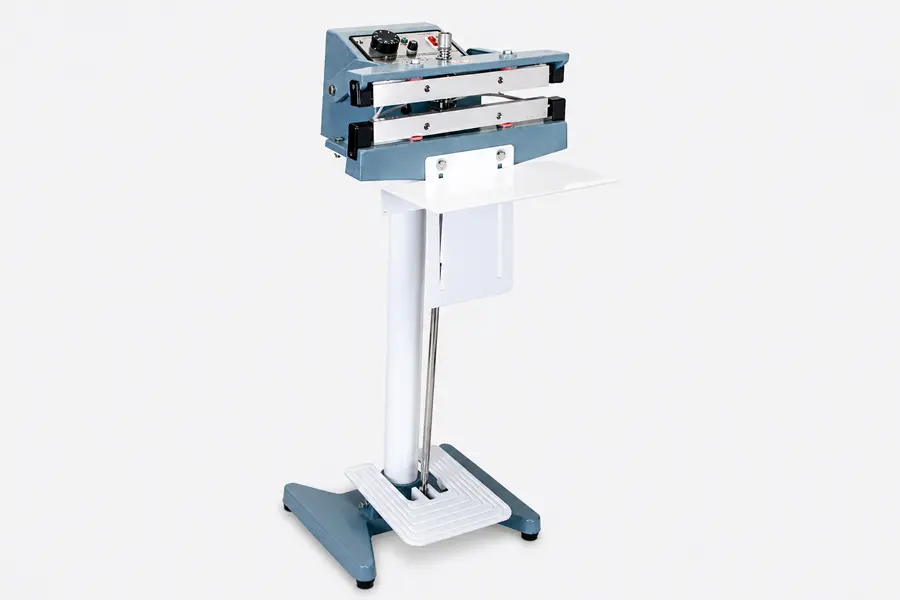
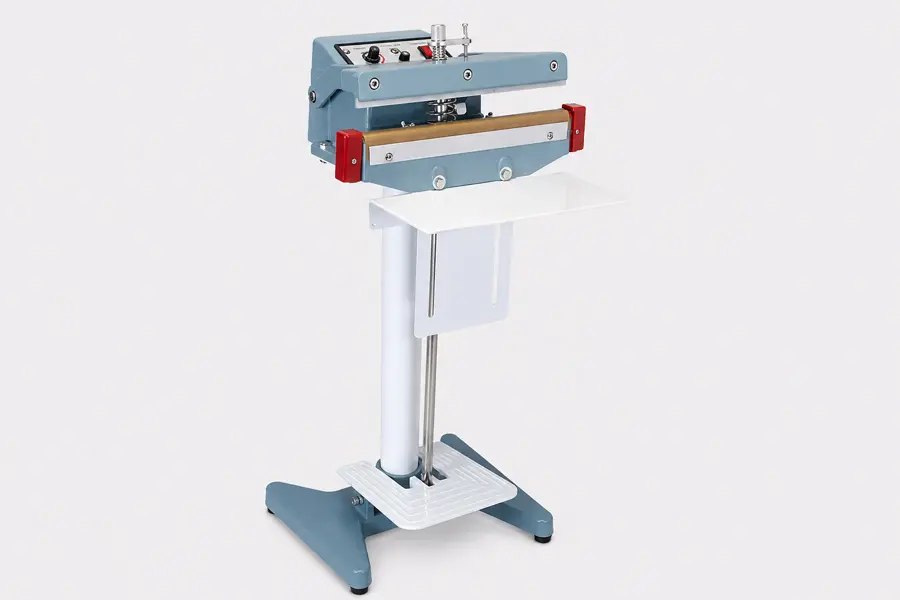
Foot-operated bag sealers let operators position and support a package with both hands while using a pedal to control the sealing jaws. This format is useful for repetitive packaging tasks where bag alignment and product handling are important. The appropriate model depends on the packaging material, required seal, package dimensions, and expected workload.
This collection includes impulse, double-impulse, and constant-heat equipment. These technologies are not interchangeable for every application. Compare the equipment specifications with your actual film construction and total sealing thickness before selecting a machine.
What is a foot-operated bag sealer?
A foot-operated bag sealer uses a pedal to operate the sealing jaws, leaving both hands available to position the bag and support its contents. It is a manually loaded packaging tool, not an automatic filling or sealing line. Operators must follow the equipment instructions and keep hands clear of the jaws during use.
What types of foot pedal sealers are available?
This collection includes impulse, double-impulse, and constant-heat models. The main differences involve how heat is delivered to the packaging material and the applications each machine is designed to handle. Start with your bag material and required seal, then compare the suitable equipment types.
When should I consider an impulse sealer?
Impulse equipment applies heat during the sealing cycle rather than maintaining continuously heated sealing surfaces. It is an option for compatible heat-sealable films when the model’s capabilities match the material and thickness. Explore our foot-operated impulse heat sealers to compare sealing lengths, seal widths, and listed trim-and-seal configurations.
What does double impulse mean?
Double-impulse equipment delivers impulse heat from both sides of the sealing area. This construction may suit applications that require heating through thicker compatible materials, but it does not mean the machine creates two separate seals. Confirm the selected model’s material and thickness capabilities before ordering.
When should I consider a constant-heat sealer?
Constant-heat equipment maintains heated sealing surfaces during operation. It may be appropriate for compatible materials that require this heating method rather than an impulse cycle. Review our foot-operated constant-heat sealers and confirm suitability for the specific film or laminate you use.
How do I match a sealer to my bag material?
Identify the bag’s material, layer construction, and total thickness where the seal will be made. Include additional layers created by gussets or folds. Compare these details with the equipment specifications and test representative packages. Similar-looking bags may require different equipment or settings.
How do I choose the right sealing length?
The usable sealing length must span the full flattened bag opening. Measure the bag at the sealing position, account for gussets and folds, and allow practical room for alignment. Confirm the model’s usable sealing area rather than relying only on its overall machine dimensions.
Is seal width different from sealing length?
Yes. Sealing length describes how far the seal extends across the bag opening. Seal width describes the width of the bonded band. Both matter when selecting equipment, and the available configurations vary by model. A wider seal does not automatically make an unsuitable material compatible.
Do all foot-operated sealers trim excess bag material?
No. Trimming is a model-specific feature. Choose equipment expressly listed with a trim-and-seal element if your process requires it, and confirm compatibility with the film and desired finished package. Do not assume a standard sealing model includes cutting or trimming capability.
Are foot-operated bag sealers suitable for high-volume work?
They can support repetitive packaging operations by keeping both hands available for loading and alignment. Actual output depends on product handling, sealing and cooling time, operator workflow, and the machine’s rated duty requirements. Confirm suitability for your expected workload rather than assuming a particular hourly production rate.
What should I check before setting up a sealing station?
Review the machine’s footprint, working height, electrical requirements, pedal clearance, and operating instructions. Consider how packages will be loaded, supported, and removed. Heavy or awkward contents may need separate support so the operator does not have to hold their full weight throughout the sealing cycle.
Should I choose a foot-operated or tabletop sealer?
A foot-operated model leaves both hands available for package positioning and supports a dedicated sealing station. A tabletop impulse sealer may better suit a bench-based process with different space and handling needs. Compare material compatibility, bag size, workload, and operator requirements before choosing.
How can I check finished seal quality?
Follow the manufacturer’s setup and testing instructions using the actual bag material. Check for a continuous bond without burning, distortion, or unsealed areas, and allow the recommended cooling time. Validate the finished package for its intended handling and storage conditions. Appearance alone does not establish leak resistance or other specialized performance.
Are maintenance kits available for foot-operated sealers?
Maintenance kits are available for selected foot-operated sealer models. Browse our sealer maintenance kits and match the kit to your exact machine model, sealing length, seal width, and element configuration. Standard, wider-seal, trim-and-seal, and double-impulse models may require different kits. Confirm the included components and compatibility before ordering, and follow the manufacturer’s instructions when replacing worn parts.
Can I get help selecting a foot-operated sealer?
Yes. Contact Action Packaging with your bag material, layer construction, thickness, opening width, required seal, and expected workload. Include any trimming requirements and the model number of existing equipment. You can also browse our bag sealers to compare additional equipment categories.
Choose Equipment That Fits Your Packaging Process
Tell us what you are sealing and how your packing station operates. Our team can help you compare foot-operated sealer types, dimensions, and configurations for your application.
Get Help Choosing a Foot-Operated Sealer