Foot-Operated Impulse Heat Sealers
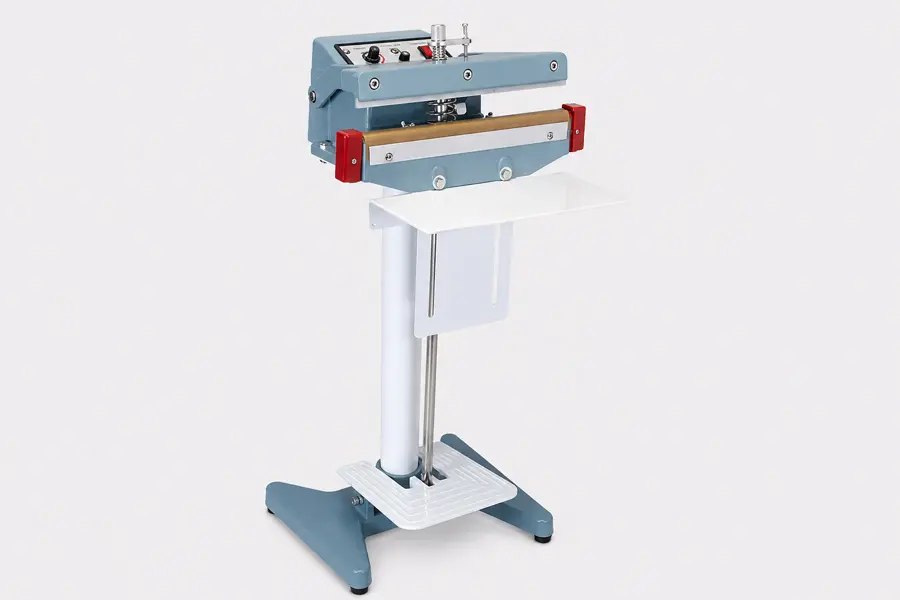
Foot Pedal Impulse Sealers for High-Volume Bag Packaging
Shop freestanding, foot-operated impulse heat sealers for repetitive, high-volume bag sealing. Pedal operation keeps both hands available for positioning and supporting bags, while impulse heating provides instant heat during the sealing cycle. Compare sealing lengths and element options with your bag dimensions, material, and required seal.
- Foot pedal operation: Keep both hands available to align and support the package.
- Freestanding design: Supports a dedicated sealing station for recurring packaging tasks.
- Multiple sealing lengths: Available in 12″, 18″, and 24″ models to accommodate different bag widths.
- Seal-width options: Choose a standard 5/64″ seal or a listed 5 mm seal-width model.
- Trim-and-seal options: Models with trim-and-seal elements are available for compatible packaging applications.
Confirm compatibility with your bag material and total sealing thickness before ordering. Browse our bag sealers to compare equipment types, or contact our team for help selecting a foot-operated sealer.
Filters
Filter
| Item # | Description | UOM | Sale Unit | Price | Quantity |
|---|---|---|---|---|---|
| MP-12F1 | 12" Foot-Operated Heat Sealers | Each | 1 | $317.46 | |
| MP-12F5 | 12" Foot-Operated Heat Sealers, 5 mm Width | Each | 1 | $383.01 | |
| MP-12F1TS | 12" Foot-Operated Heat Sealers, Trim & Seal Element | Each | 1 | $332.70 | |
| MP-18F1 | 18" Foot-Operated Heat Sealers | Each | 1 | $317.46 | |
| MP-18F5 | 18" Foot-Operated Heat Sealers, 5 mm Width | Each | 1 | $383.01 | |
| MP-18F1TS | 18" Foot-Operated Heat Sealers, Trim & Seal Element | Each | 1 | $332.70 | |
| MP-24F1 | 24" Foot-Operated Heat Sealers | Each | 1 | $432.90 | |
| MP-24F5 | 24" Foot-Operated Heat Sealers, 5 mm Width | Each | 1 | $497.34 | |
| MP-24F1TS | 24" Foot-Operated Heat Sealers, Trim & Seal Element | Each | 1 | $451.60 |
Foot-Operated Impulse Heat Sealer Buying Guide and FAQs
Foot-operated impulse heat sealers help create a dedicated station for repetitive, high-volume bag packaging. Their freestanding design and pedal-operated jaws keep both hands available for aligning and supporting the package. Impulse heating provides instant heat during the sealing cycle rather than keeping the sealing element continuously heated.
Choose from 12″, 18″, and 24″ models, with standard 5/64″ sealing elements, 5 mm seal-width options, and trim-and-seal configurations available. Match the selected model to your bag opening, film construction, total sealing thickness, and production requirements.
How does a foot-operated impulse heat sealer work?
The operator positions the bag opening between the sealing jaws and uses the foot pedal to close them. The impulse element delivers heat during the sealing cycle to join compatible film layers. Follow the equipment instructions for cycle settings, pressure, cooling time, and releasing the finished package.
Why choose a foot pedal bag sealer?
Pedal operation leaves both hands available to align the bag opening and support the contents. This is useful for repetitive packaging tasks where consistent positioning matters. It does not make the process automatic, and operators must keep hands clear of the sealing jaws during use.
Are these sealers freestanding?
Yes. These foot-operated models are freestanding units suited to a dedicated packaging area. Before ordering, confirm the equipment dimensions, working height, electrical requirements, and any package-support needs for your workspace.
Should I choose a 12″, 18″, or 24″ sealer?
Select a sealing length that spans the full flattened bag opening without leaving an unsealed section. Measure the bag where it will pass between the jaws, including any gussets or folds. Confirm the usable sealing length in the model specifications and allow practical clearance for positioning.
What is the difference between sealing length and seal width?
Sealing length describes how far the seal extends across the bag opening. Seal width describes the width of the sealed band. These models are available with a standard 5/64″ seal or a listed 5 mm seal-width configuration. Choose both dimensions around your packaging requirements rather than assuming a wider seal is suitable for every material.
What does a trim-and-seal element do?
A trim-and-seal element is intended to seal compatible film and trim excess material at the sealing line. Choose a model specifically listed with that feature and confirm the film and finished-package requirements before ordering. Standard sealing models should not be assumed to include trimming capability.
Which bag materials can these impulse sealers close?
Compatibility depends on the film material, construction, and total thickness passing through the jaws. Confirm the selected model’s specifications against your actual bag, including laminated layers and gusseted sections. Do not assume that every plastic, foil laminate, or multilayer pouch can be sealed with the same equipment or settings.
Are foot-operated impulse sealers suitable for high-volume packaging?
These units are suited to repetitive, high-volume bag sealing where pedal operation helps the operator maintain control of the package. Actual output depends on loading time, bag handling, seal and cooling cycles, and the equipment’s rated duty requirements. Confirm the model is appropriate for your expected workload rather than assuming a specific hourly production rate.
How do I determine the correct sealing settings?
Start with the equipment manufacturer’s instructions for the selected film and thickness. Test representative bags and inspect the finished seals for a continuous bond without burning, distortion, or unsealed areas. Follow the recommended cooling procedure and validate the seal for your product’s handling and storage requirements.
How do impulse and constant-heat sealers differ?
Impulse sealers apply heat during the sealing cycle. Constant-heat sealers maintain heated sealing surfaces during operation. The appropriate type depends on your packaging material and required seal. Explore our foot-operated constant-heat sealers if your material requires that equipment type, and confirm compatibility before selecting a model.
Should I choose a foot-operated or tabletop impulse sealer?
A foot-operated unit keeps both hands available for bag positioning and supports a dedicated sealing station. A tabletop impulse sealer may suit a bench-based workflow with different space and handling requirements. Compare bag dimensions, workload, available workspace, and operator needs before deciding.
What should I check when ordering replacement sealing parts?
Match replacement elements and other service parts to the exact model, sealing length, seal width, and element type. A standard sealing element and a trim-and-seal element are not interchangeable by assumption. Disconnect power and follow the manufacturer’s maintenance instructions before servicing equipment.
Can I get help matching a sealer to my packaging process?
Yes. Contact Action Packaging with your bag dimensions, film material, thickness, gusset details, desired seal width, and expected workload. Include whether trimming is required and the model number of any equipment you already use. You can also browse our bag sealers to compare additional equipment types.
Find the Right Foot-Operated Sealer for Your Bags
Tell us about your packaging material, bag opening, required seal, and production needs. Our team can help you compare sealing lengths, element options, and equipment compatibility before you order.
Get Help Choosing a Bag Sealer