
Small reclosable bags are a practical tool for jewelers, makers, retailers, repair shops, and anyone organizing a personal collection. They keep pieces separated, make inventory easy to identify, and limit exposure to dust and handling. The important part is choosing the right bag for the jewelry inside. A standard clear bag, an anti-tarnish bag, and a soft breathable pouch do different jobs.
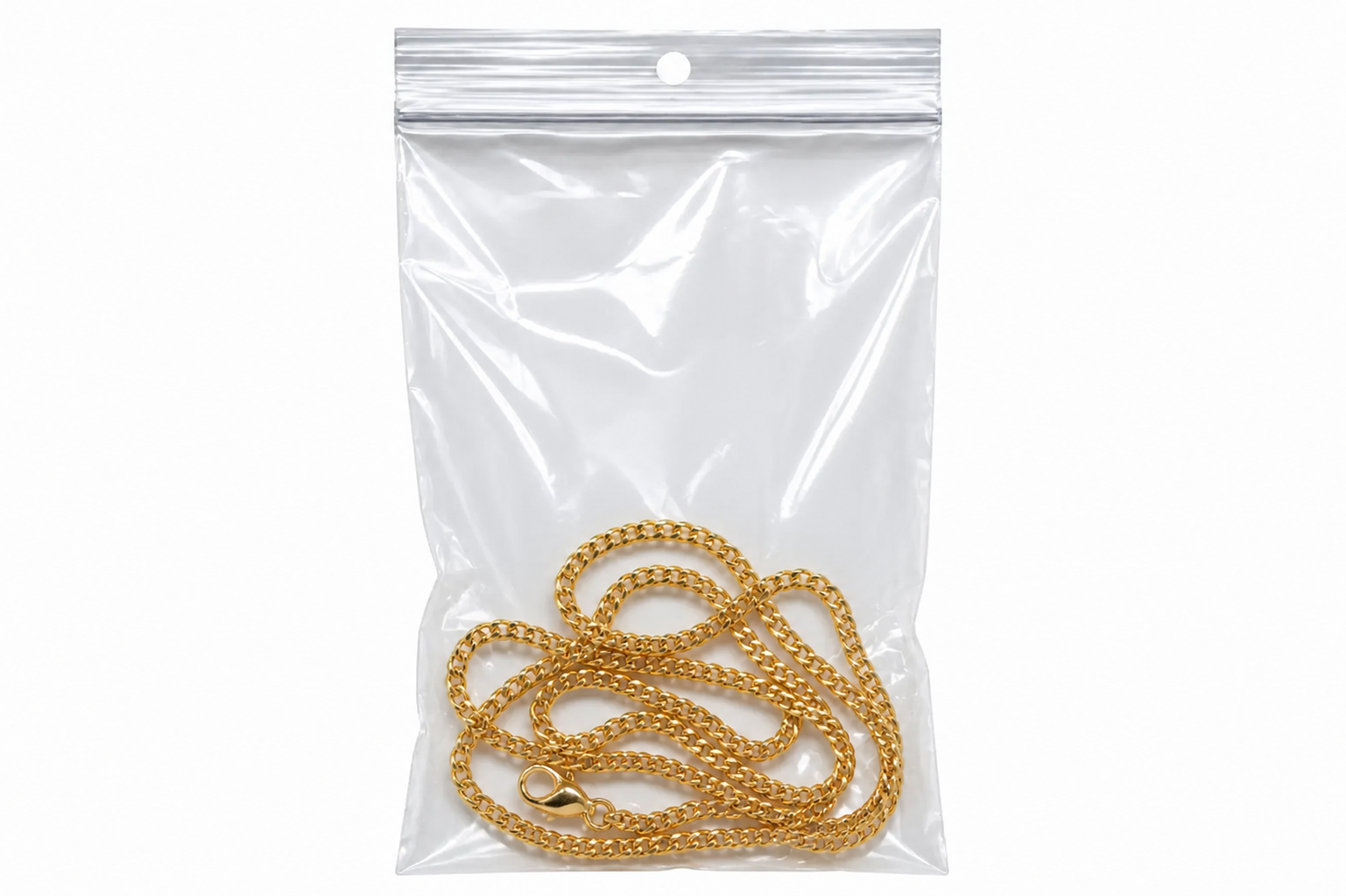
Can you store jewelry in zip bags?
Yes, many types of jewelry can be stored in clean, dry zip bags when each piece is bagged separately. Clear polyethylene bags are useful for organization, dust protection, and reducing contact between pieces. For sterling silver, copper, brass, and other metals prone to tarnish, a purpose-made anti-tarnish bag provides more appropriate protection than an ordinary clear bag.
Pearls should not be kept in ordinary plastic bags. Opals and other moisture-sensitive or treated gems may also require special care. When a piece is valuable, antique, plated, delicate, or made with mixed materials, follow the jeweler’s care instructions.
7 uses for zip bags in the jewelry industry
-
Separating individual jewelry pieces
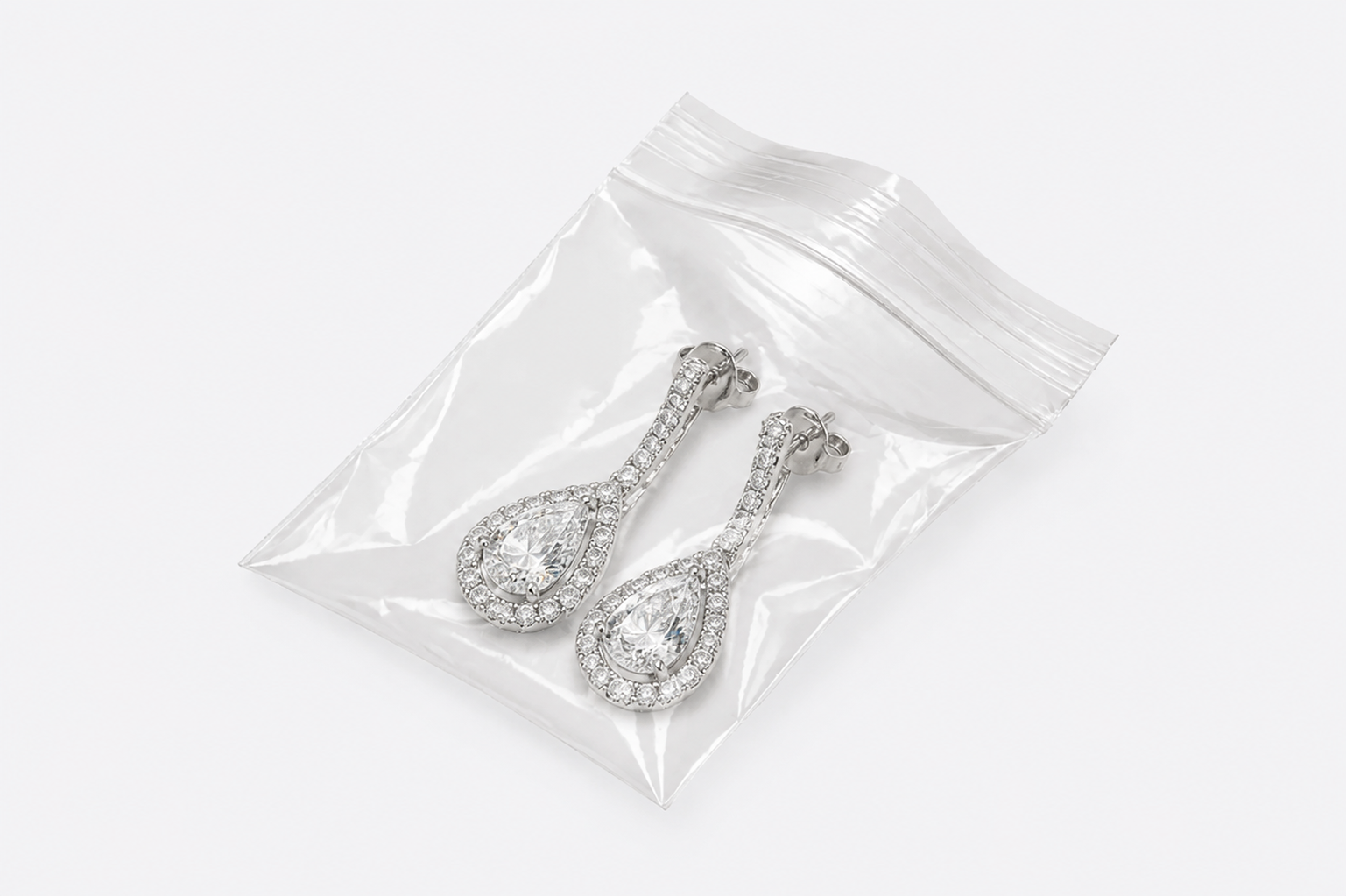
Placing one ring, bracelet, pair of earrings, or necklace in each bag prevents pieces from rubbing against one another. This simple separation can reduce scratches, tangled chains, missing earring backs, and mixed inventory.
-
Organizing back stock and work-in-progress
Clear jewelry zip bags let teams identify contents without opening every package. They are useful for sorting finished goods, repair jobs, samples, beads, clasps, stones, findings, and components. A label or bag with a write-on area can add the SKU, material, size, customer name, or repair number.
-
Helping protect tarnish-prone metals
Silver, copper, and brass react with substances in their environment. Storing clean, dry pieces separately and limiting outside air can help, but a regular plastic bag is not the same as an anti-tarnish bag. For longer storage, use packaging specifically designed to protect tarnish-prone metal.
-
Keeping necklaces from tangling
Fasten the clasp and place one necklace loosely in each appropriately sized bag. The chain should not be bunched tightly or caught in the zipper. For very fine or long chains, add a smooth jewelry card or use a compartmented package to keep the chain positioned.
-
Kitting coordinated sets
A small clear bag can keep matching earrings, necklace pendants, chains, care cards, and replacement backs together. Compartment bags are another option when two related items need to stay in one package without touching.
-
Preparing jewelry for fulfillment
Reclosable bags create a clean inner package for picking, packing, and order verification. Because the contents remain visible, staff can confirm the correct style and quantity before the bag goes into its presentation box or shipping package.
-
Supporting retail display and sampling
Clear bags help customers and staff see the product while keeping small items contained. Hang-hole styles can support peg displays, while standard mini zip bags work well for samples, loose components, and behind-the-counter organization.
Can all jewelry be stored in plastic bags?
No single storage method is right for every piece. Metal type, plating, gemstones, stringing material, surface finish, age, and previous treatments can all change the best choice. Use this table as a practical starting point.
| Jewelry type | Recommended approach | What to keep in mind |
|---|---|---|
| Sterling silver and silver plate | Store clean and dry in an individual anti-tarnish bag or with a suitable anti-tarnish material. | Ordinary zip bags can limit handling and outside contaminants, but they do not provide the same protection as anti-tarnish packaging. |
| Solid gold | Use an individual clean, dry bag or a soft-lined compartment to prevent contact with other pieces. | Pure gold does not tarnish, but the alloys used in gold jewelry can. Separation is also important because gold is relatively soft and can scratch. |
| Gold-plated and fashion jewelry | Store individually after wiping away moisture, oils, lotion, and cosmetics. Use a soft pouch, clear bag, or anti-tarnish option recommended for the piece. | A thin plated finish can wear from friction. Do not let multiple pieces rub together inside one bag. |
| Copper and brass | Use individual anti-tarnish packaging for longer storage. | Keep the piece dry and avoid direct contact with materials that may accelerate discoloration. |
| Pearls | Use a soft, breathable pouch and keep pearls separate from harder jewelry. | Do not store pearls in ordinary plastic bags. Their surfaces can be scratched or damaged by inappropriate storage materials and overly dry conditions. |
| Opals and delicate or treated gemstones | Follow care instructions from a qualified jeweler and protect each piece from impact and abrasion. | Some gems and treatments are sensitive to heat, dryness, chemicals, or sudden temperature changes. A generic plastic bag is not a complete care solution. |
| Necklaces and fine chains | Fasten the clasp and give each necklace its own bag or compartment. | Choose a bag large enough for the chain to lie loosely. Keep it away from sharp clasps, pendants, and other chains. |
Important distinction: “Reclosable” describes the closure, not the level of preservation. A standard clear zip bag helps with containment and organization. An anti-tarnish bag is a specialty product designed for tarnish-sensitive metals. Neither replaces proper cleaning, cushioning, secure storage, or material-specific care.
How to choose zip bags for jewelry
Start with the jewelry material
Decide whether the priority is simple organization, tarnish control, retail presentation, or shipping preparation. Choose specialty packaging when the metal or application calls for it.
Measure the item, not the box
Measure the widest and longest points of the piece, including pendants and clasps. Add enough room for easy insertion and a relaxed fit without excessive empty space.
Match thickness to handling
Lightweight, smooth items may need less film thickness than heavy, pointed, or frequently handled pieces. Sharp edges may also need a soft wrap, insert, or more protective package.
Choose the right closure and features
A standard press-to-close bag fits everyday use. Hang holes support peg display, write-on areas improve identification, and compartments help separate related parts.
For a detailed sizing method, see our guide to choosing the right zip bag size, mil thickness, and closure type.
How to store jewelry in zip bags step by step
- Check the care requirements. Confirm that a plastic bag is appropriate for the metal, gemstone, finish, and stringing material.
- Clean the piece correctly. Follow the maker’s instructions. Do not use a one-size-fits-all cleaner on jewelry with unknown stones, treatments, plating, or adhesives.
- Let the jewelry dry completely. Trapped moisture can work against the protection you are trying to create.
- Use one piece or matched pair per bag. Keep harder items away from softer metals and gemstones.
- Remove excess air gently. Do not press hard enough to bend a chain, loosen a setting, or stress the jewelry.
- Close the zipper fully. Make sure no chain, thread, or component is caught in the seal.
- Label for easy identification. For business inventory, include the SKU, material, size, order, or repair number as needed.
- Store the bag in a protective location. Use a drawer, tray, cabinet, jewelry box, or shipping container that protects the bag from crushing, heat, sunlight, and theft.
Are zip bags enough for shipping jewelry?
A zip bag can be an effective inner package, but it should not be the only protection used for shipping. The bag keeps small parts together and makes order checking easier. It does not provide meaningful impact protection, hide valuable contents, or prevent a pointed item from puncturing the film.
After bagging the jewelry, secure it in a protective insert, pouch, or jewelry box. Then choose an outer mailer or shipping box with cushioning appropriate for the item’s shape and value. High-value shipments may also require tamper-evident procedures, tracking, insurance, signature confirmation, or other controls defined by the seller and carrier.
Presentation still matters at the customer-facing stage. For more options, read How to Choose the Best Packaging for Fashion Jewelry and Small Accessories.
Jewelry zip bag FAQs
Is it safe to store gold jewelry in plastic bags?
For many solid gold pieces, an individual clean and dry plastic bag is useful for separation and organization. Pure gold does not tarnish, but the alloys mixed into gold jewelry can. Gold is also relatively soft, so keep each piece separate and protect it from harder stones, clasps, and metals. Plated, antique, or gemstone-set pieces may require different care.
Can you store silver in zip bags?
Yes. Clean, dry silver can be stored individually in a sealed polyethylene bag. For better protection against tarnish, choose a purpose-made anti-tarnish bag or use a suitable tarnish-inhibiting material. Avoid assuming that every clear reclosable bag is anti-tarnish.
Do plastic zip bags prevent jewelry from tarnishing?
A standard zip bag can reduce exposure to handling, dust, and some outside contaminants, which may help slow tarnishing when the piece is clean, dry, and properly sealed. It cannot guarantee that tarnish will not occur. Anti-tarnish bags are the better choice for metals that need targeted protection.
Should pearls be stored in zip bags?
No. The Gemological Institute of America advises against storing pearls in plastic bags. Keep them in a soft, breathable pouch, away from harder jewelry that could scratch the nacre. Avoid excessively dry storage and follow the pearl seller’s care instructions.
How do you store necklaces without tangling?
Fasten each necklace and place it in its own appropriately sized bag or compartment. Let the chain lie loosely, and do not catch it in the zipper. A smooth jewelry card or insert can help position a fine chain and keep the pendant from shifting.
What size mini zip bags are best for jewelry?
There is no single best size. Measure the piece at its widest and longest points, then add enough room to insert it easily and close the seal without pressure. Rings, earrings, and charms may fit small bags, while necklaces and bracelets need more room to lie naturally.
Can several pieces of jewelry go in the same bag?
Individual storage is safer. Multiple pieces can rub, scratch, tangle, or react with one another. Keep matched earrings together only when they cannot damage each other, and use compartments or separate inner bags for multi-piece sets.
Find the right jewelry zip bags
Whether you are organizing components, protecting tarnish-prone metal, preparing orders, or packaging jewelry in bulk, Action Packaging offers standard and specialty reclosable bags for a wide range of jewelry workflows.
Jewelry-care references: Storage recommendations were checked against guidance from the Gemological Institute of America, GIA’s pearl travel and storage guidance, and the Canadian Conservation Institute’s silver-care guidance. Material-specific instructions from the jewelry maker or a qualified jeweler should take priority.