
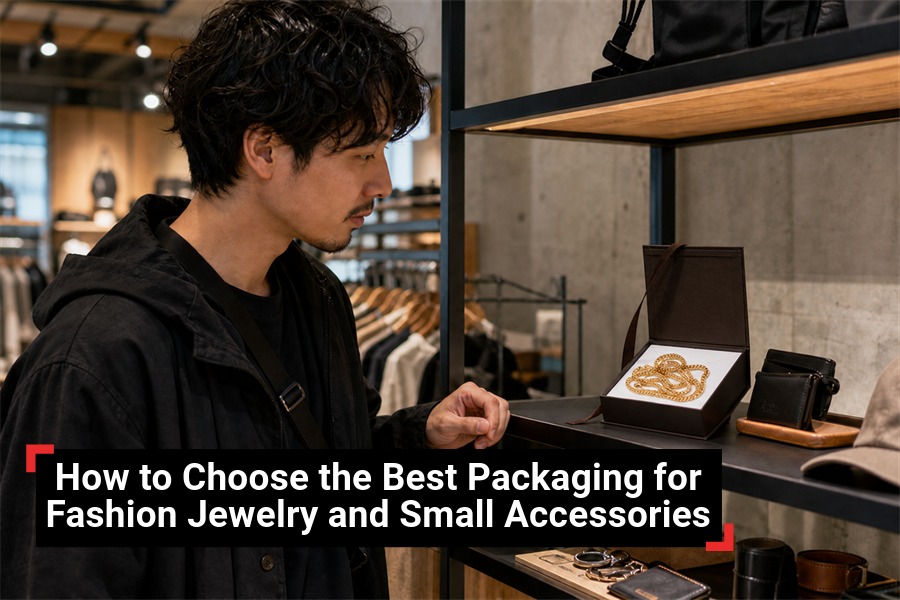
The right packaging can make an affordable pair of earrings feel special, keep a delicate necklace from getting lost in inventory, and turn a small accessory into a gift-ready purchase.
For jewelry retailers, boutiques, gift shops, and online sellers, packaging has to do more than hold a product. It may also need to protect the item, make it easy to display, support your brand, and create a positive experience for the customer.
There is no single package that works best for every piece. A clear hanging bag may be ideal for earrings displayed on a retail rack, while a soft pouch or jewelry box may be more appropriate for a gift purchase. The best choice depends on what you sell, how it will be displayed, and what customers expect at its price point.
This guide compares practical packaging options for fashion jewelry and small accessories so you can find the right combination for your products, customers, and sales channels.
What Should Jewelry Packaging Accomplish?
Before comparing materials and styles, decide what the packaging needs to do. Most jewelry packaging serves some combination of five purposes:
- Protect the item from dust, fingerprints, scuffs, and everyday handling
- Keep small pieces and matching sets together
- Make products easy to organize, label, and count
- Support an attractive retail display or online presentation
- Create an experience that feels appropriate for the product and its price
Inexpensive stud earrings sold on a retail rack may need visibility and efficient merchandising more than an elaborate unboxing experience. A necklace purchased as a gift may benefit from a soft pouch or protective box.
Matching the package to the product helps you spend where presentation matters while keeping everyday packaging practical and efficient.
Quick Guide: Which Packaging Fits Your Needs?
Start with the job the packaging needs to perform. These four common situations can help you narrow your options quickly.
1. Clear Self-Sealing Bags for Everyday Jewelry
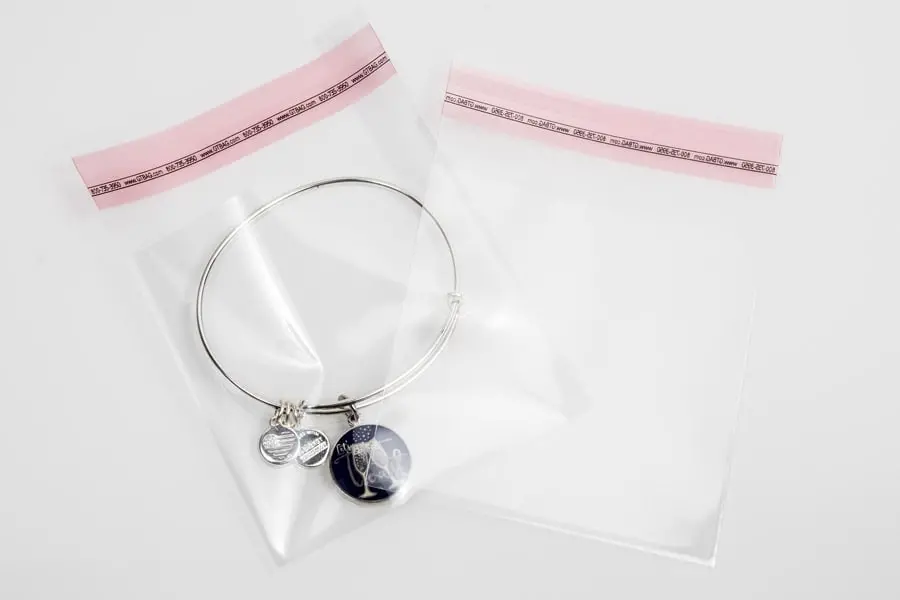
For high-volume fashion jewelry and accessories, clear packaging is often the most practical starting point. It allows customers and employees to see the product without opening the package, keeps small items contained, and creates a clean finish without adding an unnecessarily elaborate presentation.
One useful option is a clear lip-and-tape bag. This style has an adhesive flap that folds over the opening. The built-in closure eliminates the need for separate tape, twist ties, or sealing equipment.
Clear self-sealing bags work especially well for:
- Earrings attached to display cards
- Bracelets and anklets
- Hair clips, pins, and small accessories
- Pendants and charms
- Packaged jewelry sets
- Products sold through social media or online marketplaces
- Backup inventory stored behind the sales counter
A backing card can be placed inside the bag to hold the jewelry in position and provide space for a logo, price, barcode, care instructions, or product details. The clear bag protects the card and product while keeping the design visible.
This format is a strong choice when you need to package many items consistently and efficiently. It creates a more finished appearance than an open bag while remaining lightweight and economical.
When External Adhesive May Be Helpful
Standard lip-and-tape bags have adhesive inside the flap. External-adhesive versions position the adhesive differently, helping reduce the chance that a delicate product will touch the tape while it is inserted or removed.
That can be useful when packaging chains, textured accessories, or other pieces that may catch on an exposed adhesive strip. It is a small detail that can make packing easier and help prevent frustrating snags.
2. Hanging Bags for Retail Displays
If products will be sold from hooks, pegboards, or rotating racks, the packaging needs a dependable hanging feature. Trying to improvise with a label or punched backing card can lead to crooked displays and torn packages.
Lip-and-tape header bags combine a clear self-sealing compartment with a header for hanging. This makes them a practical option for earrings, bracelets, hair accessories, pins, charms, and other small products sold from retail hooks.
Hanging packages can help retailers:
- Organize merchandise by style, color, collection, or price
- Display more products in a limited amount of space
- Make restocking faster and more consistent
- Protect products from repeated customer handling
- Create a coordinated appearance across a product line
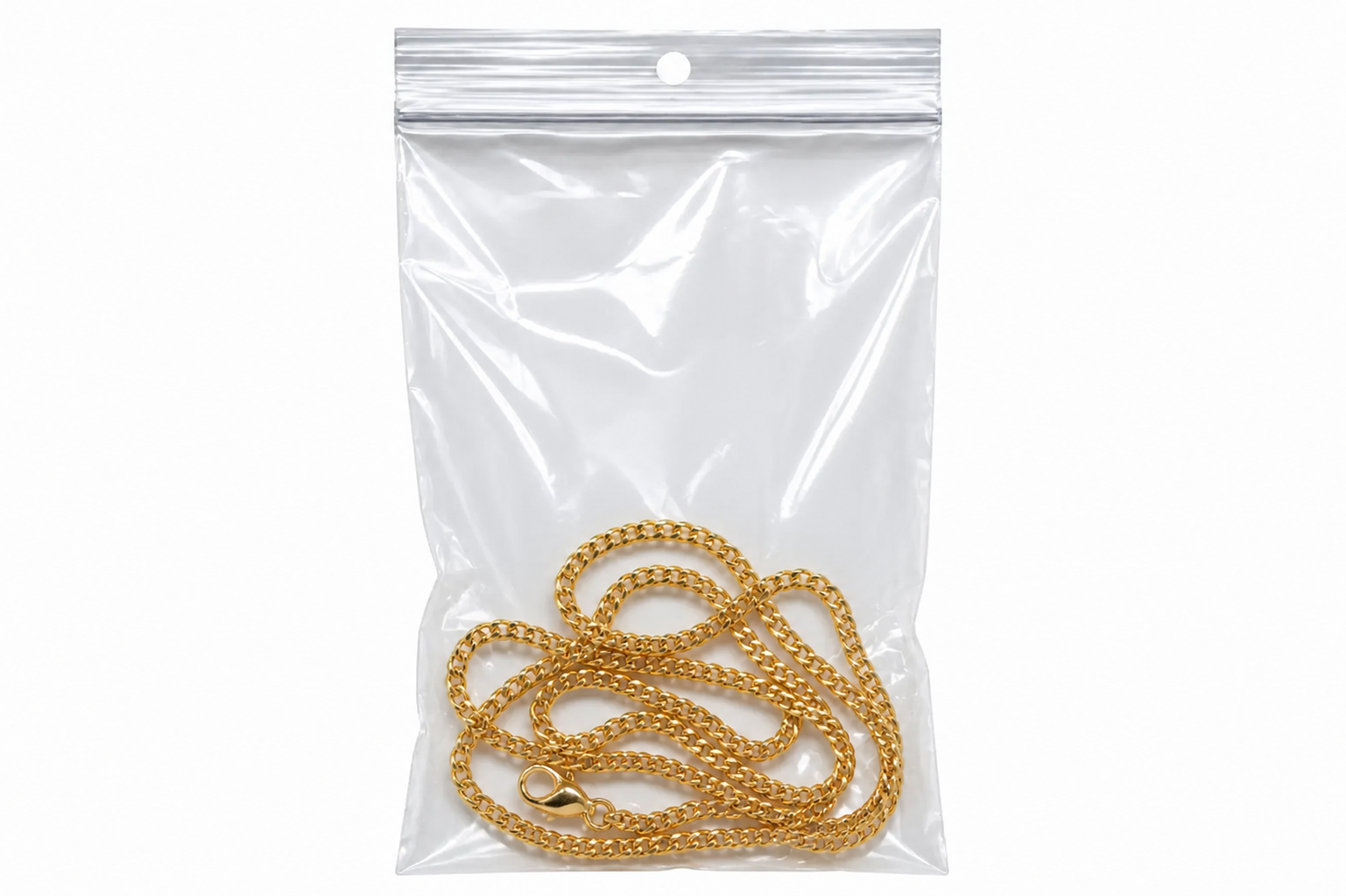
For merchandise that customers or employees may need to open and close, hang hole zip bags provide a similar display function with a reclosable zipper.
Which Hanging Style Should You Choose?
Choose a lip-and-tape header bag when you want a neat sealed presentation and the package will usually remain closed until purchase.
Choose a hang hole zip bag when the product may need to be removed, examined, returned to the package, or used for ongoing storage.
3. Clear Zip Bags for Storage, Organization, and Repeat Use
Not every package needs to serve as the final retail presentation. Some packaging is primarily used to keep inventory organized or protect an item as it moves through the business.
Clear zip bags are useful when jewelry needs to be accessed more than once. Their reclosable design makes them practical for:
- Organizing inventory by item number or style
- Keeping earrings and matching components together
- Holding spare clasps, backs, charms, or chains
- Preparing online orders before final packing
- Separating products during storage or transportation
- Giving customers a simple storage option
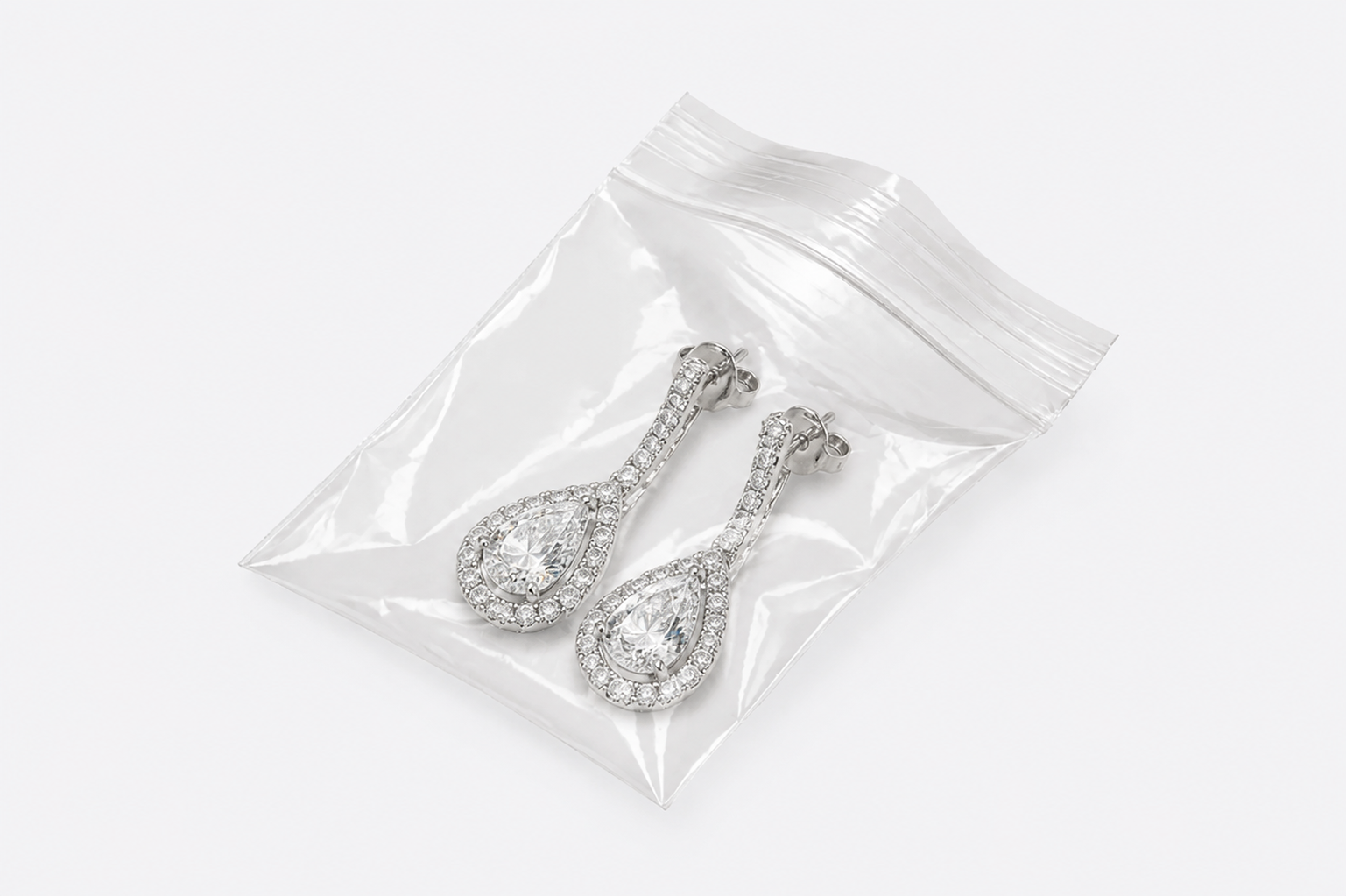
Clear zip bags are available in different sizes and thicknesses. A lightweight bag may be sufficient for earrings or small charms, while a thicker bag may be preferable for heavier pieces or products that receive more handling.
The broader selection of plastic reclosable bags also includes specialty formats for display, labeling, storage, and additional protection. The right style depends on whether the bag will be used in the stockroom, on the sales floor, during shipping, or by the customer after purchase.
Standard clear plastic packaging helps keep jewelry clean and organized, but it should not automatically be treated as long-term tarnish prevention. If tarnish control is important, select packaging made specifically for that purpose and follow the recommended storage practices for the metal.
4. Drawstring Pouches for a Gift-Ready Upgrade
When the customer experience matters as much as visibility, a fabric pouch can give jewelry a warmer and more intentional presentation.
Drawstring pouches are popular for jewelry because they are compact, lightweight, easy to close, and often reusable. Customers can keep the pouch for travel or storage, extending its usefulness beyond the original purchase.
.webp)
Drawstring pouches are a good option for:
- Boutique jewelry
- Gift purchases
- Handmade collections
- Seasonal promotions
- In-person markets and pop-up shops
- Customer loyalty gifts
- Limited-edition product releases
A pouch can also provide a simple upgrade at checkout. A retailer might display products in clear packaging, then place selected purchases in a pouch after the sale. This approach preserves visibility on the sales floor while giving the customer a more gift-like experience.
Choosing a Pouch Material
The material influences how the product feels before the customer even sees the jewelry inside.
Velvet and velour pouches create a soft, traditional jewelry presentation. They pair well with rings, earrings, pendants, watches, and small gift items. Browse soft velvet pouch options when you want a classic, polished look.
Suede-style pouches offer a soft-touch appearance without requiring a rigid box. Options such as double-faced simulated suede jewelry pouches and Royal Suede drawstring pouches can help elevate boutique collections and gift purchases.
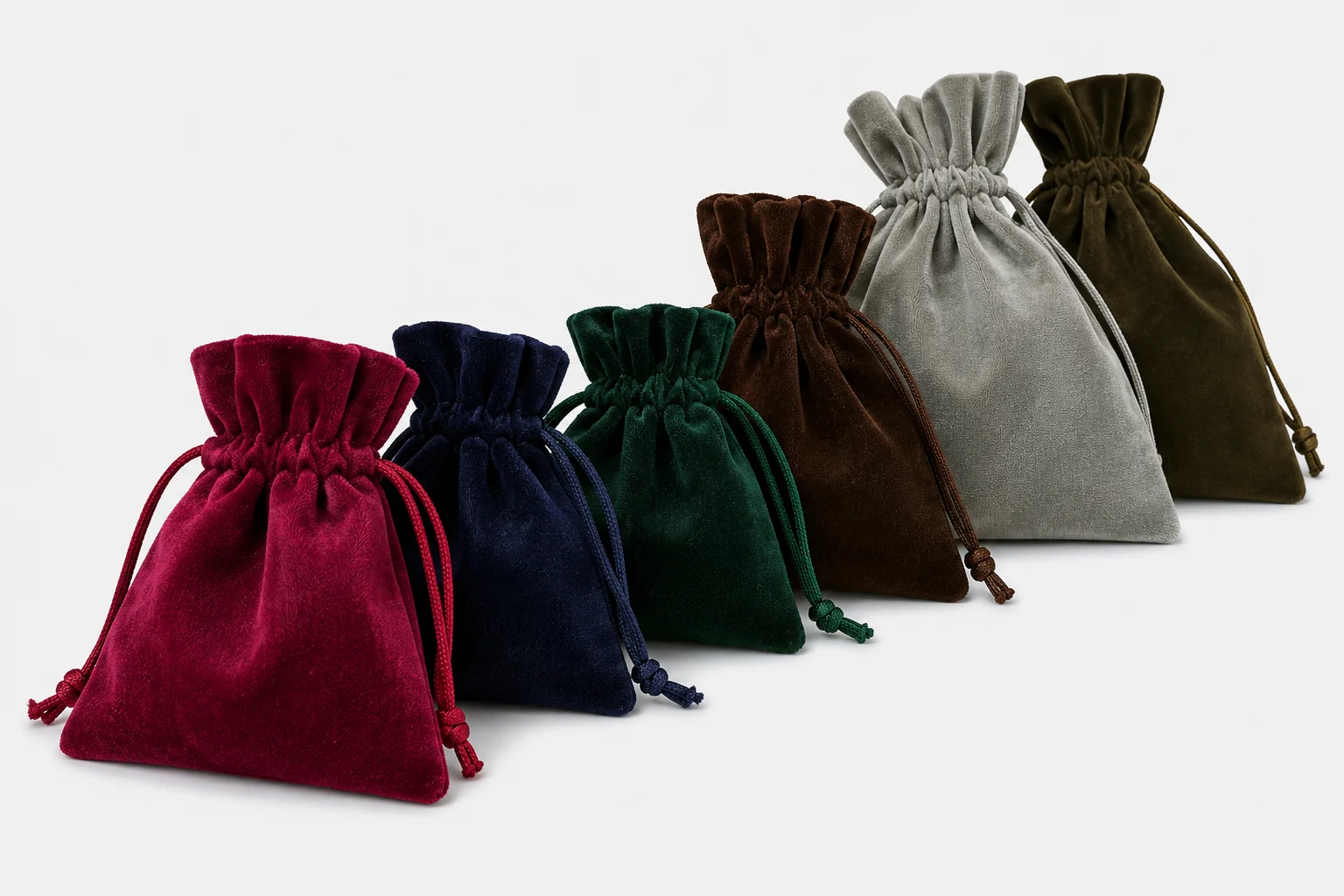
Satin pouches have a smooth, decorative finish and work well for celebrations, special promotions, and gift-oriented merchandise. Satin drawstring gift and jewelry pouches are suitable for pieces ranging from small jewelry items to larger accessories.
Organza pouches offer a lighter, more decorative presentation while allowing some visibility through the material. They can work well for watches, bracelets, small gifts, event favors, and accessory sets.
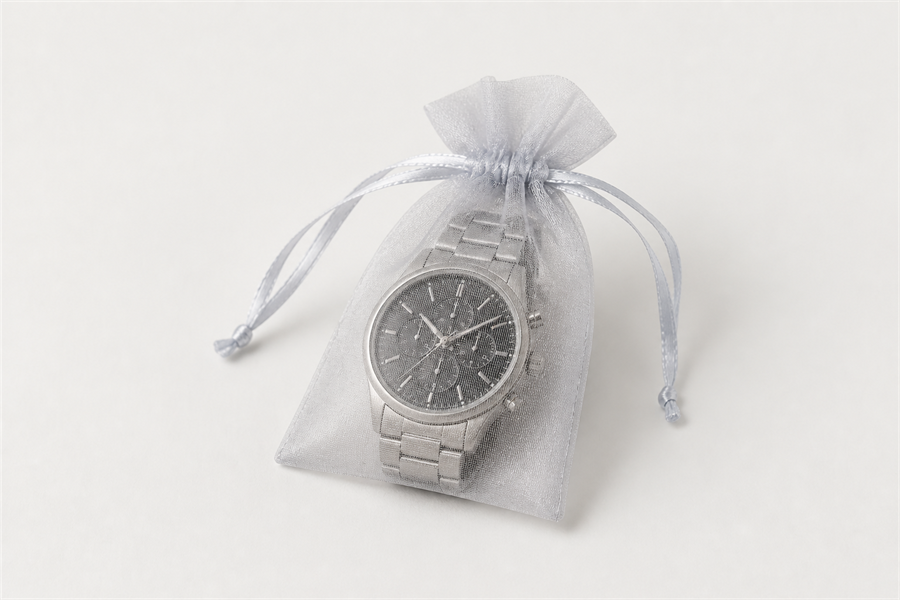
A pouch can help reduce minor scuffing and keep pieces contained, but it does not offer the rigid protection of a box. Delicate chains should be secured before they are placed inside, and highly fragile pieces may need an insert or another protective layer.
5. Jewelry Boxes for Protection and Perceived Value
A jewelry box is usually the best choice when the item needs more structure, a stronger presentation, or a memorable gifting experience.
Jewelry boxes are available in different sizes, colors, finishes, and interior styles for rings, earrings, bracelets, necklaces, watches, and sets. Many include inserts that cushion the jewelry and hold it in a consistent position.
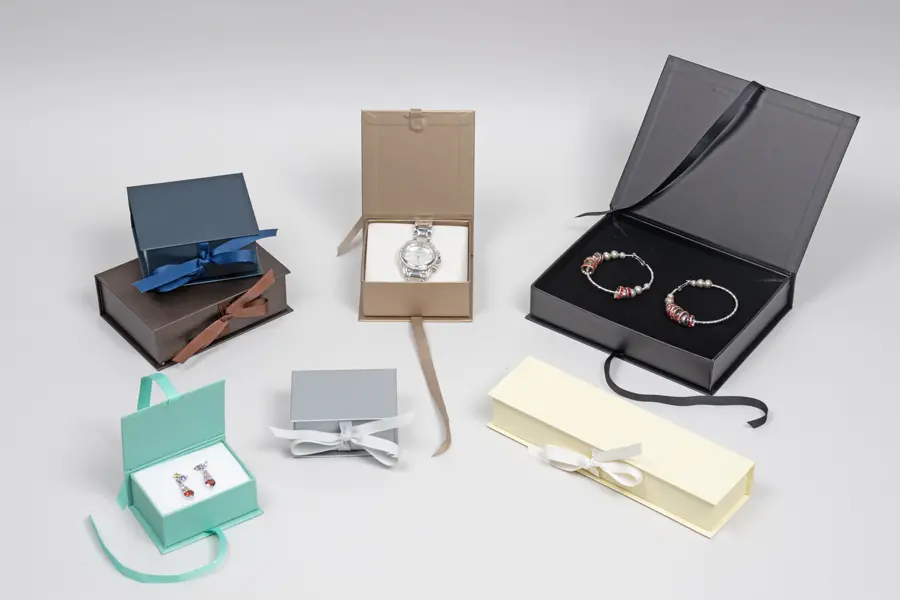
Boxes are especially useful for:
- Fragile or delicate jewelry
- Higher-priced fashion jewelry
- Fine jewelry
- Gift purchases
- Special collections
- Milestone or commemorative pieces
- Products that need to remain positioned during presentation
A box can also support the selling process. Opening a well-presented box at the counter creates a more deliberate reveal than handing over a loose item or clear bag. That experience may be appropriate even when the jewelry itself is not considered fine jewelry.
Packaging does not have to be black, glossy, or ornate to feel intentional. Gloss white jewelry boxes can provide a clean, modern presentation, while kraft boxes complement natural, handmade, and understated brand styles. Textured and foil finishes can add visual interest for seasonal collections or gift-oriented merchandise.
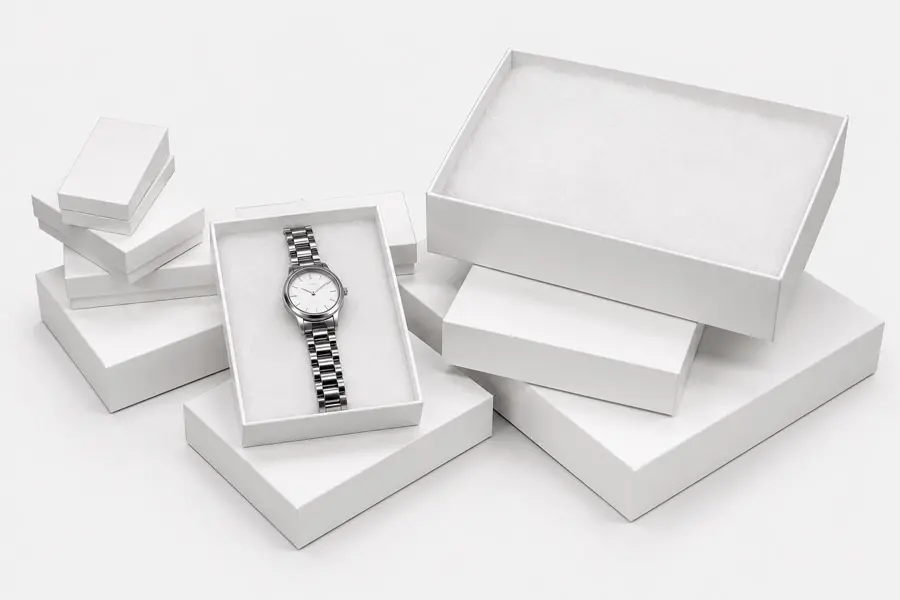
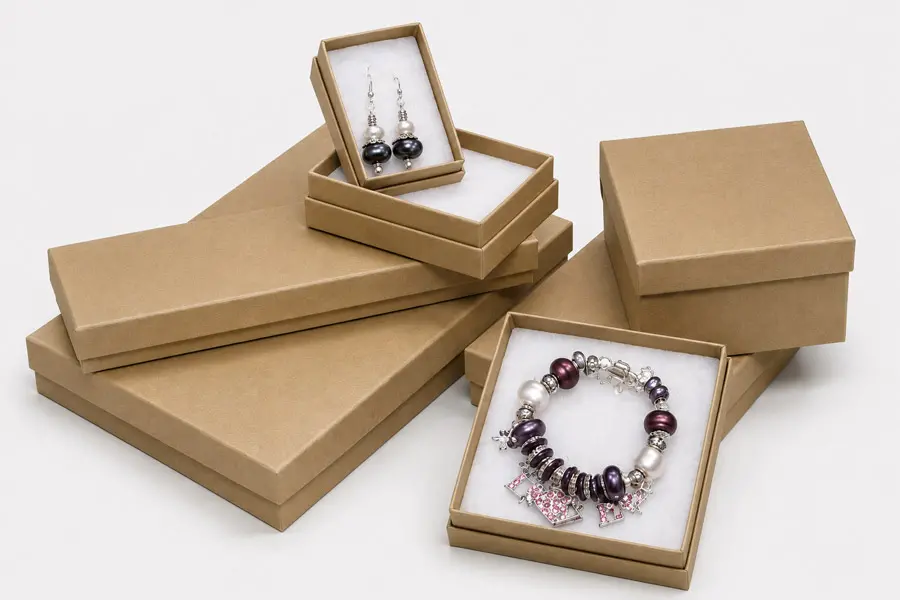
The goal is not to place every product in the most elaborate package. It is to make sure the presentation feels consistent with the product’s value and the customer’s expectations.
6. Custom Jewelry Boxes for Brand-Building
For an established jewelry line, packaging can become part of the product.
Custom-printed jewelry boxes can feature a business name, logo, artwork, or other brand elements. Because customers often keep jewelry boxes, branded packaging can continue to represent the business long after the purchase.
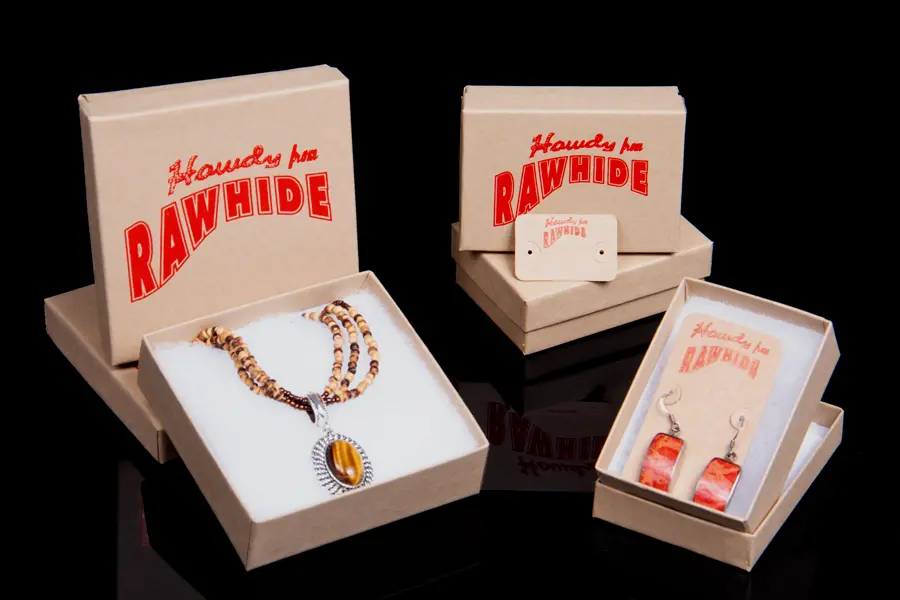
Custom boxes may be a good fit for:
- Boutiques developing a private-label collection
- Jewelry stores that want consistent branded packaging
- Gift shops with exclusive merchandise
- Online brands focused on the unboxing experience
- Subscription or influencer mailings
- Seasonal collections and product launches
Before ordering custom packaging, consider how many box sizes your product line actually requires. Standardizing around a small group of sizes can simplify purchasing, storage, packing, and inventory management.
How to Match Packaging to Your Sales Channel
The same jewelry may need different packaging depending on where and how it is sold.
For Pegboard and Rack Displays
Use lip-and-tape header bags or hang hole zip bags. They keep products visible, organized, and ready to hang.
For Counter Displays
Use jewelry boxes, display cards inside clear self-sealing bags, or pouches that can be presented after the customer selects an item.
For Online and Social Media Orders
Use a clear self-sealing or reclosable zip bag to keep the piece contained, then place it inside the appropriate shipping package. Add a pouch or box when the product positioning or price supports a more elevated unboxing experience.
For Markets, Pop-Ups, and Mobile Selling
Choose packaging that is lightweight, compact, and easy to organize. Clear bags simplify product identification, while drawstring pouches can provide a quick gift-ready upgrade at checkout.
For Gift Purchases
Offer a pouch or jewelry box as the standard package, an optional upgrade, or a seasonal add-on. This gives customers more flexibility without requiring premium packaging for every sale.
A Tiered Packaging System Can Work Better Than One Package
Many jewelry businesses do not need to choose only one packaging format. A tiered system can support different products, selling environments, and price points more effectively.
- Everyday items: Clear self-sealing bags with branded backing cards
- Hanging retail products: Header bags or hang hole zip bags
- Inventory and fulfillment: Clear reclosable zip bags
- Gift-ready upgrade: Velvet, suede-style, satin, or organza drawstring pouches
- Higher-value products: Jewelry boxes with protective inserts
- Signature collections: Custom-printed jewelry boxes
This approach keeps packaging costs aligned with the product while maintaining a consistent customer experience. Repeating the same brand colors, logo, typography, or label style across each tier can help the entire assortment feel connected.
How to Choose the Right Size
Oversized packaging allows jewelry to move around and can make a small item look less substantial. Packaging that is too tight may be difficult to close or could put pressure on the product.
Before ordering:
- Measure the jewelry at its widest and longest points.
- Include the backing card, insert, or padding in your measurements.
- Allow space for the zipper, adhesive flap, or drawstring to close.
- Check that chains and hanging components will not catch in the closure.
- Test the finished package in your display fixtures and shipping materials.
- Order samples when possible before committing to a larger quantity.
The best fit should hold the item comfortably while limiting unnecessary movement and excess material.
Final Jewelry Packaging Checklist
Before selecting a package, ask:
- Will customers need to see the jewelry without opening it?
- Will the product hang from a retail hook?
- Does the package need to be opened and closed repeatedly?
- How much protection does the item require?
- Is the purchase likely to be given as a gift?
- Does the presentation match the product’s price and positioning?
- Can employees pack the product quickly and consistently?
- Is there room for a logo, price, barcode, or care instructions?
- Will the package fit your displays, storage bins, and shipping materials?
Answering these questions will usually narrow the choices quickly.
Find the Right Packaging for Your Jewelry Business
The best jewelry packaging is not necessarily the largest or most elaborate option. It is the one that protects the product, supports the way it is sold, and creates an experience that feels right for the customer.
Clear self-sealing bags offer efficient everyday presentation. Zip bags make repeat access and organization easier. Hanging bags support retail merchandising. Drawstring pouches add a gift-ready touch, while jewelry boxes provide structure and a more premium experience.
Explore the options below to compare sizes, styles, materials, and presentation levels for your product line.