Boxes




Filters
Filter


Choosing Packaging Boxes for Your Business
The right packaging box depends on what you are packing, how it will be handled, and how you want to present it. A retail purchase, a prepared meal, and a shipped order each place different demands on the package. Start with the intended use, then compare dimensions, materials, closures, and any interior components your products need.
Start With the Packaging Application
Use the box categories to narrow your search before comparing individual products:
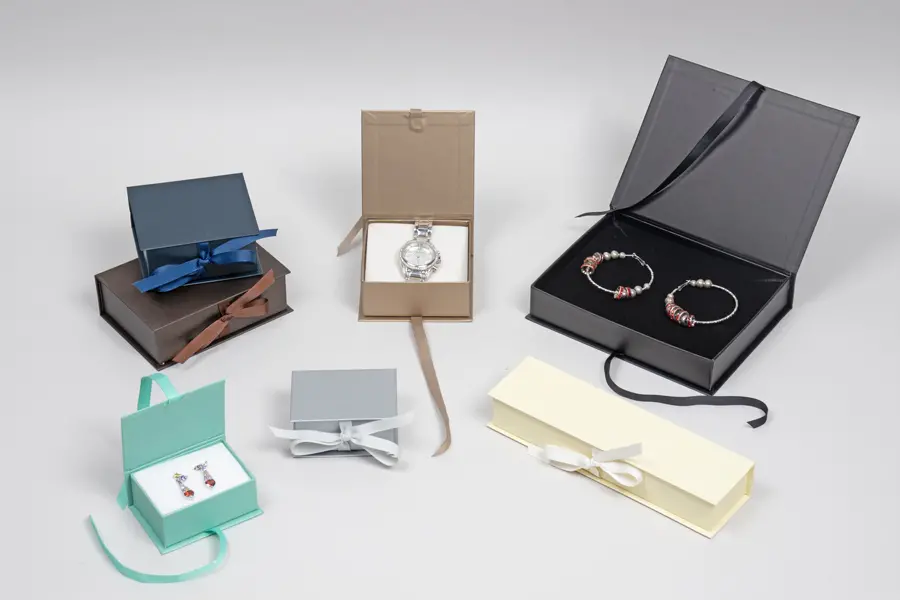
- Retail and gifting: Explore gift boxes, apparel boxes, and jewelry boxes for merchandise, coordinated sets, and presentation packaging.
- Food and confections: Browse bakery boxes, candy boxes, pizza boxes, and take-out boxes for the food you plan to package.
- Shipping: Compare mailing boxes for orders that need an outer package, allowing room for appropriate cushioning and protection.
- Specialty presentation: Review magnetic boxes and plastic boxes when the closure, structure, or product visibility is part of your packaging plan.
Check Fit Before Choosing a Style
Measure the complete contents, including wrapping, inserts, dividers, or protective materials. Confirm whether the listed box dimensions are interior or exterior measurements, and account for the space needed to close the lid without pressing on the product.
For product sets, lay out the intended arrangement before selecting a size. A box that fits one item may need additional depth or width when accessories, tissue, or an insert are added.
Compare Construction and Packing Requirements
Folding boxes can be useful when storage space and assembly are important considerations. Rigid styles offer a formed structure for presentation, while other constructions serve specific food, retail, or shipping applications. Check each listing for assembly, lid inclusion, closure details, and intended use.
When purchasing wholesale packaging boxes for recurring orders, keep the selected item numbers and packaging specifications together. Review your expected use and available storage space so you can plan replenishment around your business needs.
Planning to ship a presentation box? Check whether it requires a separate outer mailing box and cushioning. A decorative finish or rigid shape alone does not establish that a box is suitable for parcel shipment.
Packaging Box FAQs
How do I choose the right packaging box?
Start with the product and its intended use. Identify whether you need retail presentation, food packaging, or a shipping package, then compare dimensions, construction, closure, and any required inserts or protective materials.
Can I purchase packaging boxes in bulk?
Yes. Browse the product listings for current ordering units and purchasing information. Available styles, order requirements, and packaging configurations vary by item.
Are box dimensions interior or exterior measurements?
Check the specific listing rather than assuming the measurement convention is the same across every product line. If the usable interior space is unclear, contact our team with the item number and your product dimensions before ordering.
What is the difference between folding and rigid boxes?
Folding boxes generally assemble from a flat format, while rigid boxes have a formed structure. Assembly, storage needs, closures, and presentation vary by design, so compare the individual product details for your application.
Do all boxes include a lid?
No. Some styles have an attached closure, some include a separate lid, and others may list bases and lids separately. Review the product description to confirm what is included and whether another component is required.
Can gift boxes be used as shipping boxes?
Confirm the intended use of the specific box. Many presentation boxes need a separate outer package and appropriate cushioning for shipment. Browse mailing boxes when planning the shipping portion of your package.
Which boxes should I choose for food?
Start with the relevant food packaging category and confirm the selected product’s suitability for the food, temperature, moisture, and grease involved. Do not assume every retail or gift box is suitable for direct food contact.
Are inserts and dividers included?
Included components vary by product. Check whether the listing includes an insert or divider, offers it separately, or supplies the box alone. Confirm compatibility when combining components from different listings.
Are all packaging boxes recyclable?
Recyclability depends on the material, coatings, attached components, and local collection requirements. Review the specific product information and your local program’s guidance rather than treating every box style the same.
Can I order custom boxes with my logo?
Explore our custom box options to find a direction for your project. Share your product dimensions, intended use, artwork, and preferred presentation so our team can review suitable styles and customization options.
Create Packaging Boxes for Your Brand
Explore custom box styles for retail products, gifts, food packaging, and shipped orders. Our team can help you review materials, dimensions, printing, and finishing options for your business.
Explore Custom Boxes