FIBC Buying Guide
The right bulk bag is not selected by dimensions alone. Use these nine specifications to match the bag to your material, equipment, operating environment, and purchasing needs before you request a quote.
The short answer
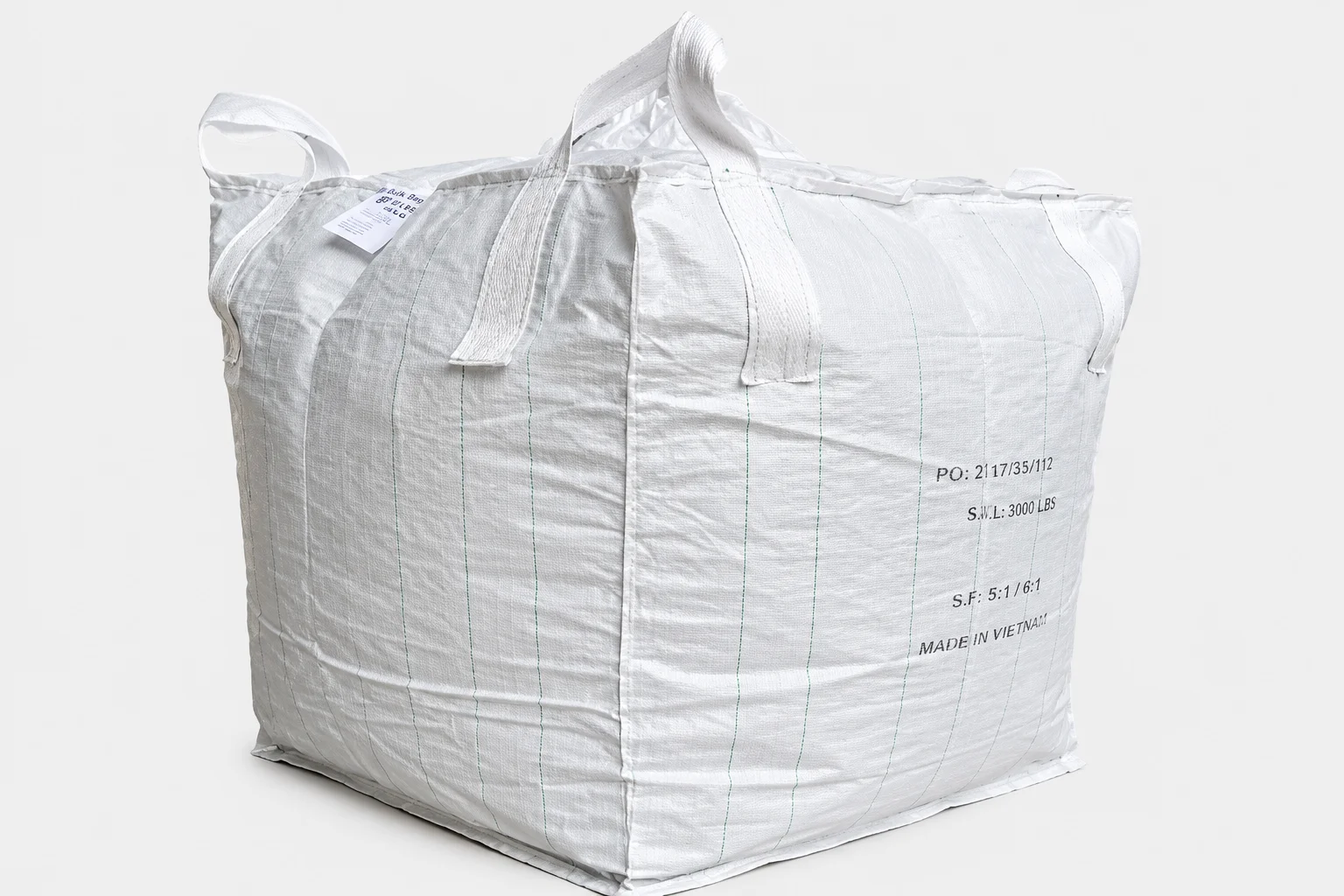
To choose an FIBC bulk bag, identify the material being packaged, its bulk density, the target fill weight, required bag dimensions, electrostatic hazards, filling and discharge methods, lifting equipment, protection requirements, and any regulatory or facility-specific requirements. Give those details to the bag supplier rather than choosing from size or price alone. The supplier can then help determine whether a stock bag fits or a custom FIBC is needed.
What Material Are You Packaging?
Begin with the product, not the bag. Flexible Intermediate Bulk Containers, commonly called FIBCs, bulk bags, or super sacks, are generally used for dry, flowable products such as powders, granules, pellets, seed, feed, fertilizer, sand, aggregates, and other industrial materials. However, two products that appear similar can behave very differently during filling, storage, transportation, and discharge.
Your supplier needs more than a product name. Describe the characteristics that affect containment and handling:
Particle behavior
Is the material a fine powder, free-flowing pellet, coarse aggregate, irregular flake, or material that tends to bridge or compact?
Product sensitivity
Does it need protection from moisture, contamination, oxygen, light, or product loss through seams?
Process hazards
Is the product combustible, chemically reactive, abrasive, hot when filled, or subject to regulated transportation requirements?
Important: Do not assume a bag is suitable because another business uses a similar-looking FIBC for a similar product. Product properties, process conditions, equipment, and hazards must be evaluated for your application.
What Is the Material’s Bulk Density?
Bulk density is the weight of a material per unit of volume, commonly stated in pounds per cubic foot in the United States. It connects the space inside the bag to the amount of product the bag may hold. A dense mineral and a lightweight agricultural product can occupy the same volume while producing very different filled weights.
Example: 50 cubic feet of usable volume × 40 pounds per cubic foot = approximately 2,000 pounds of material.
This calculation is only a planning estimate. Nominal bag dimensions do not necessarily equal usable filled volume, and a bag must never be loaded above its labeled Safe Working Load. The way the material settles, required headspace, bag shape, filling process, and stability limits can all reduce practical capacity.
Best practice: Use the bulk density of the actual material under expected process conditions. Internet averages or the density of a similar product may not be accurate enough for bag selection.
What Fill Weight, Safe Working Load, and Safety Factor Do You Need?
Tell the supplier the target net weight of product in each bag. The selected FIBC must have a labeled Safe Working Load, or SWL, that is appropriate for that load. The SWL is the maximum load established for the bag under its specified conditions of use.
You may also see a safety factor, or SF, written as a ratio such as 5:1 or 6:1. The Flexible Intermediate Bulk Container Association defines this as a performance ratio related to how the FIBC is designed and tested relative to its SWL. It does not give the user permission to load above the labeled SWL.
Never treat the safety factor as extra payload capacity. A bag labeled for a 2,000-pound SWL should not be filled beyond 2,000 pounds simply because it has a 5:1 safety factor. Follow the label, manufacturer instructions, applicable standards, and your facility’s handling procedures.
If reuse is being considered, discuss it explicitly with the supplier. Do not assume that a bag can be reused because it appears undamaged or because of its safety-factor ratio. The intended use category, inspection requirements, previous contents, handling history, contamination risk, and manufacturer instructions all matter.
What Dimensions and Bag Construction Fit the Operation?
Bag width, length, and height affect more than volume. They also influence filled shape, stability, pallet fit, clearance beneath filling equipment, warehouse layout, truck or container utilization, and compatibility with discharge stations.
Measure the physical limits of the complete process:
- Available clearance beneath the filling equipment
- Pallet dimensions and acceptable loaded footprint
- Maximum filled height for racks, doors, trailers, or containers
- Space required for lifting loops and handling equipment
- Discharge-station dimensions and outlet clearance
- Required headspace and closure space above the product
Common body constructions include circular or tubular, U-panel, four-panel, and baffle designs. These terms describe how the bag body is built. They do not indicate whether the bag is Type A, B, C, or D.
When should you consider a baffle bag?
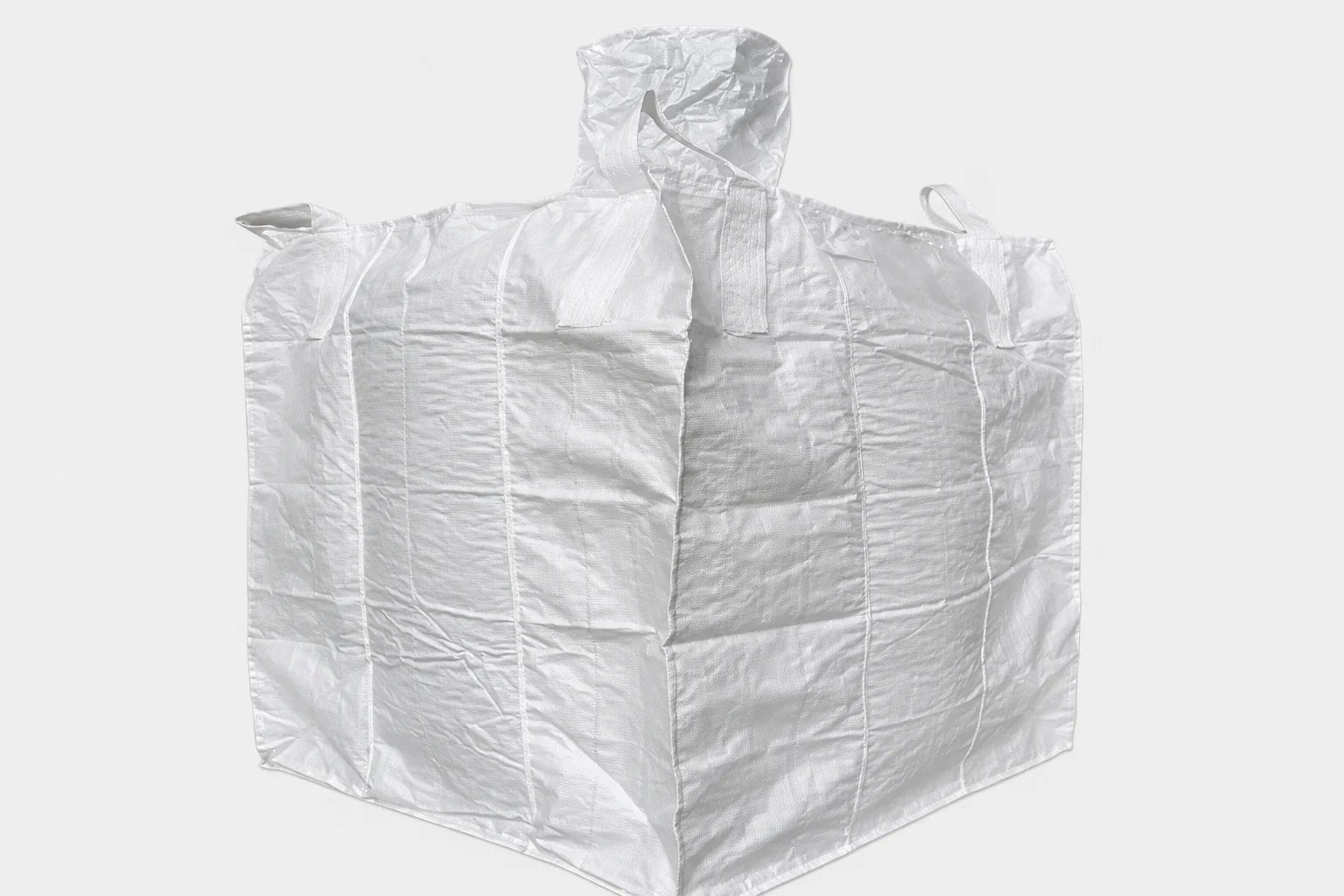
Baffle bulk bags, also called Q bags, can improve shape retention and space utilization during storage and transportation. They may be useful when pallet fit, warehouse organization, stacking configuration, or trailer and container efficiency are priorities.
A baffle bag still needs the correct dimensions, load rating, top and bottom design, fabric, liner, electrostatic classification, and handling features for the application.
Does the Process Require a Type A, B, C, or D FIBC?
FIBC Types A, B, C, and D describe electrostatic properties. The correct type depends on the material, combustible-dust characteristics, surrounding atmosphere, filling and discharge process, equipment, liners, and grounding conditions. This is a safety decision, not simply a product preference.
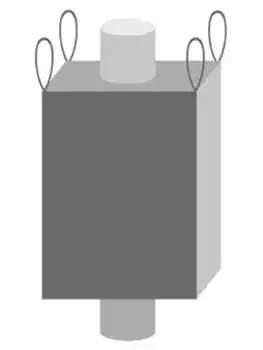
Type A
No protection against static electricity. Used only where static protection is not required.
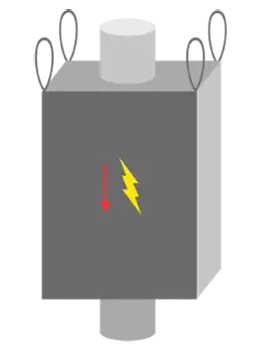
Type B
Uses low-breakdown-voltage insulating fabric but does not dissipate accumulated static charge.
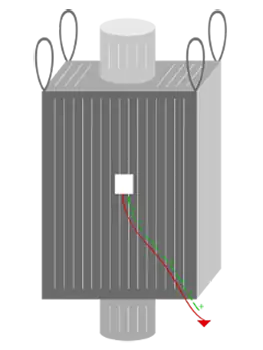
Type C
Contains interconnected conductive threads and must be properly grounded during filling and emptying.

Type D
Uses static-dissipative fabric designed to control charge without a connection to ground.
Safety warning: Type B should not be casually described as fully antistatic because it does not provide a mechanism for dissipating charge. Static-protective FIBCs and their liners must be selected for the actual product and operating atmosphere. Have qualified safety personnel complete the hazard assessment and confirm the applicable version of IEC 61340-4-4 and other requirements. See the FIBCA guidance on static-protective FIBCs.
For nonhazardous dry materials in an environment where static protection is not required, a Type A bulk bag may be appropriate. Type B, C, and D requirements are generally evaluated through a more application-specific quote process.
How Will the Bag Be Filled and Discharged?
The top and bottom should match the product flow and the equipment that will fill and empty the bag. The wrong opening can slow production, increase dust or spillage, prevent a secure connection, or require unnecessary manual handling.
| Option | What it does | Question to answer |
|---|---|---|
| Open top | Provides broad access to the bag interior. | Can the filling process remain controlled and the product adequately contained with an open top? |
| Duffle top | Uses an extended fabric skirt that can open widely and be closed after filling. | Does the operation need a large opening with a closable top? |
| Spout top | Provides a smaller inlet that can connect more closely to filling equipment. | What inlet diameter, length, and closure work with the fill head? |
| Flat or closed bottom | Keeps the base closed and may require product removal from the top or another planned method. | Is controlled bottom discharge unnecessary for this use? |
| Spout bottom | Allows more controlled gravity discharge through an outlet. | What outlet size, closure, and discharge-station connection are required? |
| Full-open bottom | Allows rapid release across a larger portion of the base. | Can the receiving system safely control a fast, high-volume discharge? |
Action Packaging carries stock configurations that include duffle-top or spout-top designs with spout bottoms. For example, compare a spout-top and spout-bottom Type A FIBC with the wider-opening options in the baffle bulk bag selection. Current specifications and availability should always be confirmed on the product page or with a representative.
How Will the FIBC Be Lifted, Moved, Stored, and Transported?
Describe the entire handling path, from the filling station to final discharge. A bag may be moved by forklift, hoist, crane, pallet, or specialized equipment, but the lifting-loop design and handling method must be compatible with the selected FIBC and its instructions.
Equipment information
- Forklift, crane, hoist, or other lifting method
- Fork dimensions and spacing
- Available vertical clearance
- Filling and discharge equipment
- Pallet or support-frame requirements
Storage and transport information
- Indoor or outdoor storage
- Expected UV, heat, moisture, and weather exposure
- Stacking plan and filled-bag stability
- Truck, rail, or ocean-container dimensions
- Handling frequency and route conditions
Safe handling matters: Inspect bags and lifting devices, follow the manufacturer’s instructions, keep personnel clear of suspended loads, use all lifting loops as designed, protect the bag from sharp edges, and never exceed the SWL. FIBCA publishes a more complete set of FIBC safe-handling guidelines.
Does the Product Need a Liner, Coating, or Sift-Resistant Construction?
Woven polypropylene fabric is strong and flexible, but the woven structure may not provide the containment or barrier performance needed for every product. Fine powders, moisture-sensitive materials, contamination-sensitive products, and products with special chemical or static-control requirements may need additional features.
Inner liner
A separate polyethylene or specialty-film liner may support moisture protection, cleanliness, or containment of fine material. Liner type, thickness, attachment, fit, and compatibility must be specified.
Coated fabric
A coating applied to the woven fabric can help reduce airflow or product migration. It is not automatically equivalent to a separate liner or a complete moisture barrier.
Sift-resistant seams
Special seam construction or sealing can help reduce fine particles escaping through stitch lines. The appropriate treatment depends on particle size and required containment.
A liner is not simply an add-on that works with every bag. It must be evaluated for the material, filling and discharge process, closure method, chemical compatibility, food-contact needs, and electrostatic classification. FIBCA specifically advises confirming that a static-protective FIBC is fitted with the correct liner for the application.
Action Packaging offers stock examples such as a spout-top and spout-bottom FIBC with a liner, while other liner, coating, seam, and barrier requirements may call for a custom specification.
What Application, Regulatory, and Facility Requirements Apply?
The final specification must account for how the bag will be used and what documentation the operation requires. Tell the supplier about food-contact expectations, hazardous-material classification, clean-production requirements, traceability, export needs, labels, printing, document pouches, metal-detectable components, or other facility standards at the beginning of the process.
Food and ingredient applications
Ask about resin compliance, manufacturing controls, facility certifications, cleaning or clean-room practices, liner suitability, traceability, and supporting documentation. FIBCA notes that the FDA does not issue approvals or certifications for complete FIBCs or FIBC liners. Therefore, avoid treating the phrase “FDA-approved FIBC” as a complete specification. Review the FIBCA food-contact clarification.
Hazardous materials and dangerous goods
A standard industrial FIBC is not automatically authorized for hazardous-material transportation. The material classification, mode of transport, packing group, tested design type, markings, closures, and applicable regulations must all be confirmed. In the United States, consult trained hazmat personnel and the current U.S. Department of Transportation requirements. FIBCA provides an overview of UN FIBC markings.
Other use-specific questions may include whether the product needs breathable or ventilated fabric, UV protection, a colored fabric or loop identification system, one- or two-sided printing, warning labels, a document pouch, or a particular pallet configuration. Businesses handling feed, seed, grain, sand, and other smaller-volume products may also want to compare agriculture bags with FIBCs to determine which format better fits the fill weight and handling process.
Should You Choose a Stock or Custom FIBC?
A stock bag can be a practical choice when its size, SWL, construction, inlet, outlet, loops, material, and documented use conditions match the application. Action Packaging’s current FIBC bulk bag selection includes stock Type A and baffle configurations in multiple sizes and top-and-bottom combinations.
A custom quote is more likely to be appropriate when you need specialized dimensions, Type B, C, or D static protection, a particular liner or coating, sift-resistant seams, special loops, UN-certified packaging, food-production controls, custom printing, unusual filling or discharge features, or a recurring high-volume supply program.
Stock does not mean universal. A readily available bag still has to be evaluated against the product, load, equipment, environment, and applicable requirements before use.
FIBC Quote Preparation Worksheet
Collecting the following information before contacting a supplier can shorten the selection process and reduce the risk of an incomplete specification. If an answer is unknown, say so. An unknown condition is better than an unsupported assumption.
- Product
- Name, composition, particle form, flow behavior, temperature, and any abrasive, chemical, combustible, or contamination concerns
- Bulk density
- Actual pounds per cubic foot or kilograms per cubic meter under expected filling conditions
- Target fill weight
- Desired net product weight in each bag and any required SWL or safety-factor specification
- Bag dimensions
- Preferred width, length, and height, plus pallet, rack, trailer, container, and equipment limits
- FIBC type
- Type A, B, C, or D based on a documented assessment of the product and operating environment
- Filling method
- Equipment type, fill-head dimensions, dust-control needs, and preferred open, duffle, or spout top
- Discharge method
- Receiving equipment, desired flow control, outlet dimensions, and preferred closed, spout, or full-open bottom
- Handling method
- Forklift, crane, hoist, pallet, lifting-frame, stacking, storage, and transportation details
- Protection features
- Liner, coating, sift-resistant seams, moisture or oxygen barrier, UV exposure, or cleanliness requirements
- Compliance and identification
- Food-contact documentation, UN marking, facility standard, printing, labels, document pouch, or traceability needs
- Order requirements
- Initial quantity, recurring usage, delivery locations, forecast, sample or testing needs, and desired timeline
Common buying mistakes to avoid
- Choosing a bag by dimensions without checking bulk density and filled weight
- Treating the safety-factor ratio as permission to exceed the labeled SWL
- Calling Type B fully antistatic even though it does not dissipate accumulated charge
- Treating baffle construction as an electrostatic FIBC type
- Assuming any virgin-polypropylene bag automatically meets a food application’s complete requirements
- Adding a liner without checking static, chemical, filling, and discharge compatibility
- Assuming an undamaged-looking bag is automatically approved for reuse
- Waiting until after purchase to check the bag against filling and discharge equipment
Frequently Asked Questions About Choosing FIBC Bulk Bags
What information do I need to choose an FIBC bulk bag?
At minimum, provide the material being packaged, its bulk density, target fill weight, desired dimensions, static or combustible-dust conditions, filling and discharge methods, lifting equipment, liner or barrier needs, applicable regulatory requirements, and estimated order quantity. The supplier may need additional information based on the application.
How do I calculate the capacity of an FIBC?
As a planning estimate, multiply usable bag volume by the material’s actual bulk density. The final allowable fill is limited by the bag’s labeled Safe Working Load, practical filled volume, headspace, stability, process conditions, and supplier specifications. Nominal dimensions alone do not establish an approved capacity.
What does a 5:1 safety factor mean on a bulk bag?
It is a design and performance ratio related to the bag’s Safe Working Load. It is not permission to load the bag to five times its SWL. Never exceed the labeled SWL, and follow the manufacturer’s instructions and applicable standards.
What is the difference between Type A, B, C, and D FIBCs?
The letters describe electrostatic properties. Type A provides no static protection. Type B uses low-breakdown-voltage fabric but does not dissipate charge. Type C uses interconnected conductive threads and must be grounded during filling and emptying. Type D uses static-dissipative fabric and does not require grounding. Selection must be based on a qualified assessment of the product, atmosphere, process, equipment, and liner.
Is a baffle bulk bag the same as a Type B FIBC?
No. A baffle bag contains internal panels that help the filled bag retain a more square shape. Type B describes an electrostatic classification. A baffle design can be specified together with the appropriate electrostatic type for the application.
When does an FIBC need a liner?
A liner may be considered when the product needs additional moisture protection, contamination control, fine-particle containment, or another barrier property. The liner must be compatible with the material, bag type, static conditions, filling and discharge process, closure, and applicable food or regulatory requirements.
Can I use a standard FIBC for hazardous materials?
Do not assume that a standard industrial FIBC is authorized for hazardous materials. The material classification, transport mode, packing group, tested packaging design, required markings, closures, and current regulations must be confirmed by trained personnel and the supplier.
Where can I buy FIBC bulk bags?
Action Packaging offers stock and custom FIBC bulk bag solutions, including Type A and baffle options. If a stock product does not match the application, submit an FIBC quote request with the worksheet information above so the team can review your requirements.